A Robot Tried to Save a NASA Telescope. US Law Still Has No Box for What It Was Doing
Katalyst's attempt to capture and boost NASA's Swift observatory was called off in August. It had every licence US law asks for, and none for the part that mattered: approaching and grabbing someone else's satellite. What the FCC's Part 100 and the Commerce pilot change, and what they still miss.
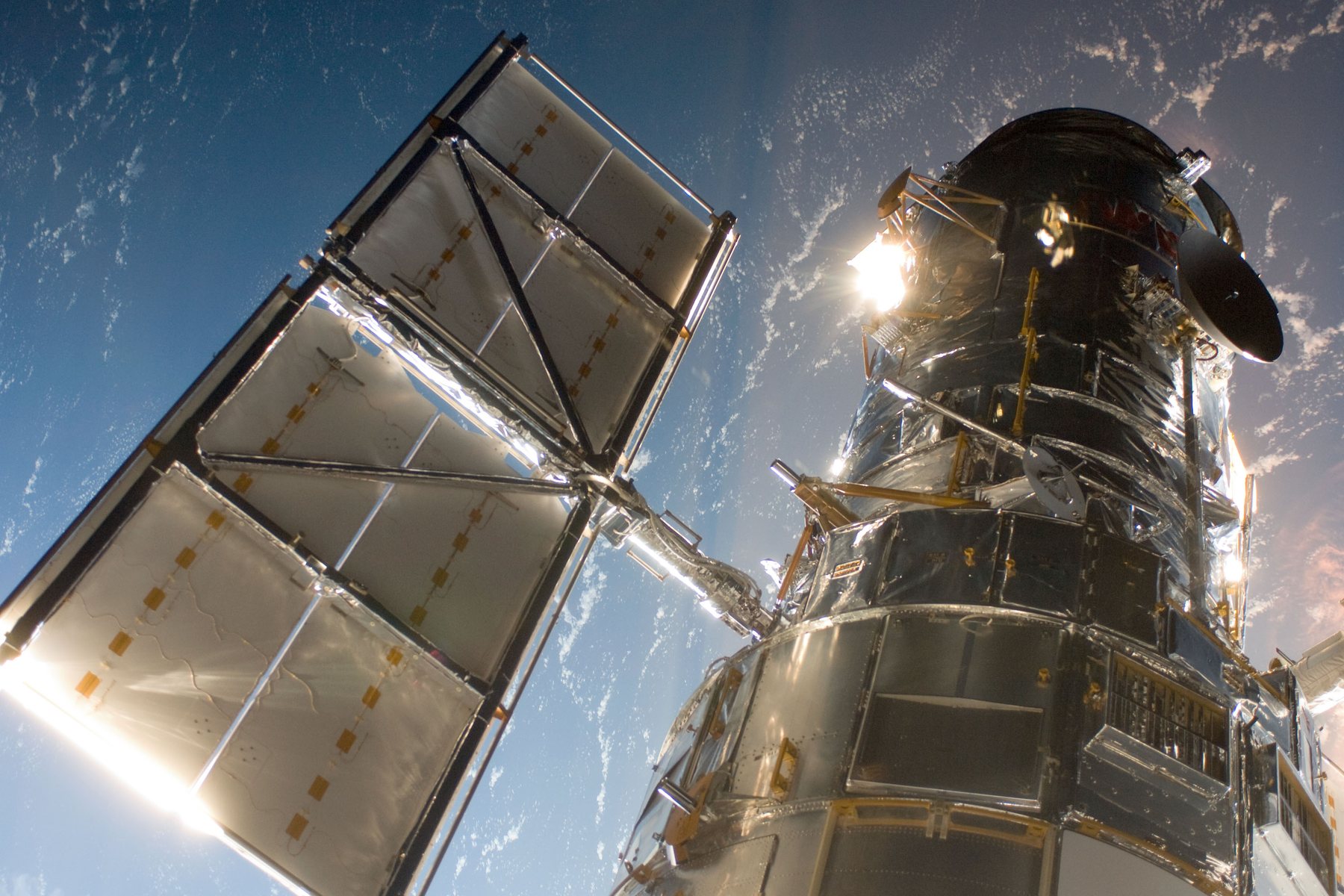
Swift was never meant to be touched. NASA launched it in 2004 to catch gamma-ray bursts, the brightest explosions in the universe, and it did that job for more than two decades. It carries no docking ring, no grapple fixture and no handles. It was designed on the assumption that when its orbit finally decayed, it would simply come down.
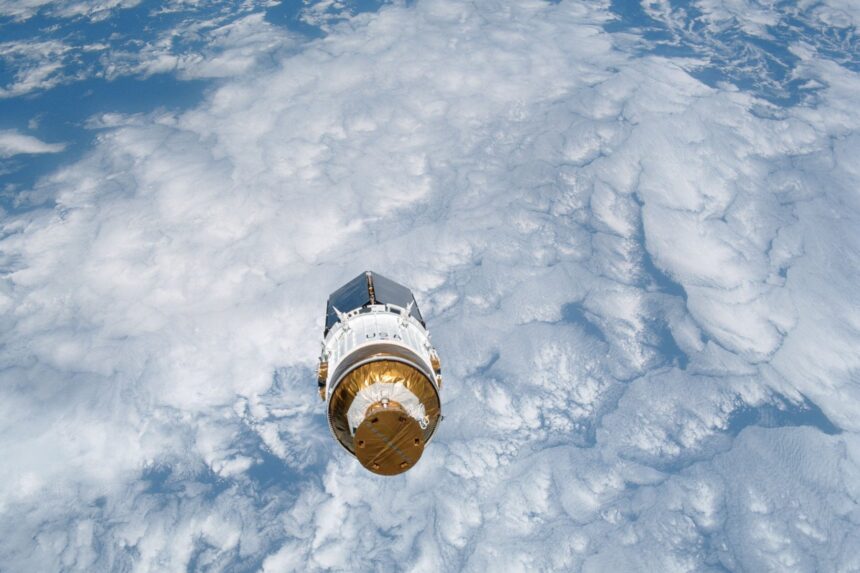
The orbit decayed faster than anyone planned. The last solar maximum puffed up the upper atmosphere, drag increased, and by January 2025 NASA was forecasting reentry by the summer of 2026. So NASA did something it had never done with a science mission. In September 2025 it paid a small company from Flagstaff, Arizona, $30 million to build a robot, launch it on an air-dropped Pegasus rocket, fly it up to Swift, take hold of the telescope with three mechanical grippers, and push it back up to about 600 kilometres.
LINK launched from Kwajalein Atoll on 3 July. By late July it was tumbling. On 19 August, NASA and Katalyst announced that there would be no capture and no boost. LINK would instead try to fly close to Swift and gather data for future servicing missions. Swift’s team switched its instruments back on, accepting a faster fall in exchange for a few more weeks of science.
NASA should be willing to move quickly and take smart risks.
Jared Isaacman, NASA Administrator, 19 August 2026
I agree with him, and I would add one thing. Taking smart risks in orbit is exactly what law is supposed to make room for. The Swift mission is being written up as an engineering story, and it is one. It is also the clearest real example we have of an American legal system that authorises launching a servicer, authorises its radios, and then has nothing specific to say about the moment it reaches out and touches another spacecraft.
What the law actually looked at
It helps to be precise here, because “unregulated” is the wrong word and I do not want to use it.
LINK went through the processes that every US commercial spacecraft goes through. The launch on Pegasus was licensed by the Federal Aviation Administration, which also runs a payload review. That review is narrow by statute: the FAA can stop a payload only on grounds of public health and safety, safety of property, national security, foreign policy, or the international obligations of the United States. It is not an assessment of whether a robotic capture of a twenty-year-old telescope is being planned sensibly. It was never designed to be. We have written about the FAA’s Part 450 regime before, and its focus is the ride to orbit.
The Federal Communications Commission licensed LINK’s transmitters, and as part of that process it asks for an orbital debris showing: collision risk, disposal plans, passivation. That is real scrutiny and it matters. But it is scrutiny of a satellite as a satellite. The FCC’s own attempt to write rules for in-space servicing, a notice of proposed rulemaking in early 2024, never became a standalone rule.
No US agency issued LINK anything that said: you may approach this particular object, on these trajectories, with these abort criteria, having shown that its owner consents. That approval, in substance, came from NASA. It came as a contract.
Why the customer ended up doing the regulator’s job
Article VI of the Outer Space Treaty says the activities of non-governmental entities in outer space “shall require authorization and continuing supervision by the appropriate State Party.” The United States has met that obligation for decades through a patchwork: the FAA for launch and reentry, the FCC for spectrum, NOAA for imaging the Earth. Anything that does not fit one of those three boxes has fallen into what American space lawyers have called the mission authorization gap since at least 2016.
On Swift, the gap closed itself, almost by accident. NASA was the owner of the target, so consent was not in doubt. NASA was the customer, so it set the requirements, reviewed the design, and sat in on the operations. NASA’s engineers at Goddard ran LINK through vibration and thermal vacuum testing in May. If you asked what “continuing supervision” looked like for this mission, the honest answer is that it looked like a very attentive client.
The liability position lands the same way. The Liability Convention does not apply to damage a launching state’s space object causes to that state’s own nationals, which is Article VII. Had LINK struck Swift, this would have been an American company damaging an American government asset. No treaty claim, no diplomacy, just the contract. That is fine for a $30 million demonstration with a single sophisticated customer.
Now change one fact. Make the customer a private operator whose satellite is registered in another country. Or make the target a dead satellite whose operator went bankrupt years ago. Or remove the customer altogether, and make the purpose inspection rather than service. The contract that did the regulating on Swift is gone, and nothing statutory takes its place.
That last case is not hypothetical. Last week I wrote about the United States confirming it has on-orbit space control weapons. A great deal of what counterspace looks like in practice is rendezvous and proximity operations, the same close approaches LINK was built to perform. The difference between a servicer and an inspector is often nothing more than consent. A licensing system that does not ask about consent cannot tell the two apart.
Other countries already ask the question
This is where I think the American conversation has been oddly provincial.
Japan’s Cabinet Office published guidelines for licensing on-orbit servicing spacecraft in November 2021, under its 2016 Space Activities Act. They are not long. They require the applicant to show a contract with a client that “holds the authority to have the client object serviced.” They ask for approach trajectories planned for a low probability of collision and, where possible, passively safe trajectories, meaning a path that will not end in a collision if the servicer loses control halfway through. They require contingency procedures for identified failure modes and a plan for sharing the operational picture with Japanese and foreign space situational awareness providers. Since then Astroscale’s ADRAS-J has flown a close inspection of a spent Japanese rocket stage, in 2024, which is exactly the kind of mission the guidelines anticipate.
The United Kingdom got there first. In March 2021 the UK Space Agency licensed Astroscale’s ELSA-d mission under the Outer Space Act 1986, describing it as the first licence it had issued for a mission involving close proximity and docking operations.
There is also a standard, ISO 24330, published in 2022, which sets out programmatic principles for rendezvous and proximity operations and on-orbit servicing. Nobody is obliged to follow it. It exists.
Read those requirements against what went wrong with LINK. A servicer lost attitude control shortly after launch and could not recover it well enough to attempt capture. Luckily it happened during commissioning, well before any close approach. The Japanese guidelines exist precisely because the dangerous version of that failure is the one that happens at twenty metres, not at two hundred kilometres.
What changed this summer
To be fair to Washington, the last three months have produced more movement on this than the previous eight years.
On 22 July the FCC adopted its overhaul of satellite licensing, moving space station rules into a new Part 100. Among the changes is a new licensing category, the variable trajectory space station, which the Commission defines to include rendezvous and proximity operations platforms and in-space servicing, assembly and manufacturing systems. Operators describe an operational envelope rather than a fixed orbit, register with an approved space situational awareness provider and keep their ephemeris current. There are no bond or milestone requirements. The Commission closed its separate 2024 servicing docket on the basis that Part 100 now covers it. The effective date has not yet been announced.
On 20 August the Office of Space Commerce opened a pilot for what it calls Space Commerce Certifications, under Section 5 of Executive Order 14335. It is aimed at “in-space activities that are not currently clearly or straightforwardly governed by existing regulatory frameworks,” which is to say, missions like LINK. One application, circulated to the FAA, FCC, Department of War, State Department and NASA, producing a certificate that may include recommended best practices. Expressions of interest are due by 5 October.
And on 15 July the House Science Committee held a hearing on the proposal, where Chairman Brian Babin asked openly whether the approach meets the sector’s needs “or whether legislative action is needed to codify the Department of Commerce’s authority over these activities.”
The case that this is enough, and why I am not persuaded
The strongest argument for the current direction goes something like this. Servicing is an immature industry. Heavy rules written now will be written around the last mission rather than the next one. The FCC route already captures collision risk, trackability and disposal. The Commerce pilot adds a single front door and interagency review. Light touch is the right touch, and if a problem appears, fix it then.
Much of that is right, and I would not want the United States to copy any regime wholesale. But three things in the current design trouble me.
First, the Commerce certificate, in the pilot’s own words, has “no direct legal effect.” It is voluntary. An operator who does not apply is in exactly the position LINK was in. It is hard to describe a voluntary, non-binding certificate as authorization and continuing supervision within the meaning of Article VI. It is a good-faith review process. It is not yet a licence.
Second, the FCC’s new category is built around what the FCC regulates, which is radio. It will ask a servicer where it might go. As far as the adopted framework has been described, it will not ask whose satellite it is going to, or whether they agreed. Consent is the single question that distinguishes servicing from harassment, and it is not the FCC’s question to ask. Nor should it be.
Third, there is nothing yet that requires a public account when a mission like this goes wrong near someone else’s asset. NASA and Katalyst have been unusually open about LINK, through NASA’s own blog and briefings. That openness was a choice. The next operator may choose differently, and the next target owner may not be NASA.
None of this needs a heavy statute. The Japanese guidelines run to a few pages. What they do that the American process does not yet do is make three things conditions of permission rather than good practice: documented consent from the target’s owner, trajectories that stay safe if the servicer fails, and disclosure of the operational plan to people who share the orbit. Congress could write those three in a paragraph. Commerce could make them conditions of a certificate that actually carries legal weight.
What this means if you are building or buying servicing
If you are a servicer, the practical point is that the absence of a licence does not mean the absence of liability. Your exposure to your client sits in your contract, and your exposure to everyone else sits in national law and, for foreign-registered targets, in the treaties. Get the risk allocation right before you fly, including what happens if your spacecraft damages the client’s asset during approach, and make sure your insurance actually responds to that scenario. A lot of in-orbit policies were not written with a second spacecraft in the picture.
If you are the owner of a satellite that someone proposes to service, ask for the approach plan, the abort criteria and the passive safety analysis in writing, and make your consent conditional on them. On Swift, NASA could do that because NASA was paying. You may not be.
If your mission is novel in the pilot’s sense, the Commerce pilot is worth applying to by 5 October. The certificate may carry no legal effect today, but the operators who go through the pilot will shape what the permanent version asks for. That is a better position than having it written around you.
And if you are a regulator anywhere else, watch what the United States does next. The world’s largest commercial space market is about to decide whether servicing is licensed as a radio problem, a voluntary certification, or something with the same bones as the Japanese and British approaches. Whatever it decides will quietly become the default for everyone else.
Where this leaves us
Swift will come down in the next few months. It had a long life and the people who tried to extend it deserve credit, not blame. A $30 million experimental spacecraft, built in under a year and aimed at a target never designed to be caught, was always a long shot. NASA said so at the start.
The legal lesson is narrower than the engineering one, and more durable. The first American attempt to rescue a satellite in orbit was supervised properly, and the reason it was supervised properly is that the client happened to be a space agency. The next one will not have that luck built in. The law should not depend on it.
Questions people actually ask
What happened to the Swift rescue mission?
NASA paid Katalyst Space $30 million in September 2025 to build a robotic spacecraft, LINK, to capture the Neil Gehrels Swift Observatory and raise its decaying orbit. LINK launched on a Pegasus XL rocket on 3 July 2026 but developed attitude control problems during commissioning. On 19 August 2026 NASA and Katalyst announced that LINK would not attempt capture or boost and would instead carry out rendezvous and proximity operations to gather data. Swift is expected to reenter the atmosphere later in 2026.
Is in-orbit satellite servicing licensed in the United States?
Not as a distinct activity. A US servicer needs an FAA launch licence, which includes a narrow payload review, and FCC authorisation for its radio transmitters, which includes an orbital debris showing. No federal agency currently issues a specific licence for approaching and capturing another spacecraft. The FCC’s Part 100 rules adopted in July 2026 create a variable trajectory space station category that covers servicing platforms, and the Office of Space Commerce opened a voluntary certification pilot for novel missions in August 2026.
What is the mission authorization gap?
Article VI of the Outer Space Treaty requires states to authorise and continuously supervise the space activities of their private companies. The United States does this through the FAA, the FCC and NOAA, each of which covers a specific activity: launch and reentry, spectrum, and Earth imaging. Activities that fall outside those three, such as satellite servicing, in-space manufacturing, private space stations and lunar operations, have no clearly designated regulator. That shortfall is known as the mission authorization gap.
What is the Space Commerce Certification pilot?
It is a pilot programme run by the Office of Space Commerce under Section 5 of Executive Order 14335. Operators planning novel in-space activities submit one application, which is reviewed by the FAA, FCC, Department of War, State Department and NASA. The result is a certificate that may include recommended best practices. The pilot is voluntary and non-binding, and a certificate has no direct legal effect on its own. Expressions of interest are due by 5 October 2026.
How do Japan and the UK regulate satellite servicing?
Japan’s Cabinet Office issued guidelines in November 2021 for licensing spacecraft that perform on-orbit servicing. Applicants must show a contract with a client that has authority over the object being serviced, plan approach trajectories that minimise collision risk and are passively safe where possible, prepare contingency procedures, and share operational plans with space situational awareness providers. The UK Space Agency licensed Astroscale’s ELSA-d mission under the Outer Space Act 1986 in March 2021, its first licence for close proximity and docking operations.
Who is liable if a servicing spacecraft damages the satellite it is servicing?
Between two parties from the same country, mostly the contract between them. The Liability Convention does not apply to damage a launching state’s space object causes to that state’s own nationals. Where the servicer and the client are registered in different states, the Liability Convention’s fault-based standard for damage in orbit can apply between the two governments, though it has never been tested in a servicing case.

Anuj KumarEditor-in-Chief
Anuj Kumar is the founder of Legal Desire Media and publishes Fashion Law Journal and Space Law Journal.
Space Law Journal is a joint initiative of Legal Desire Media and Odyogeek. Spotted something we got wrong, or want to respond? Write to space@legaldesire.com.