
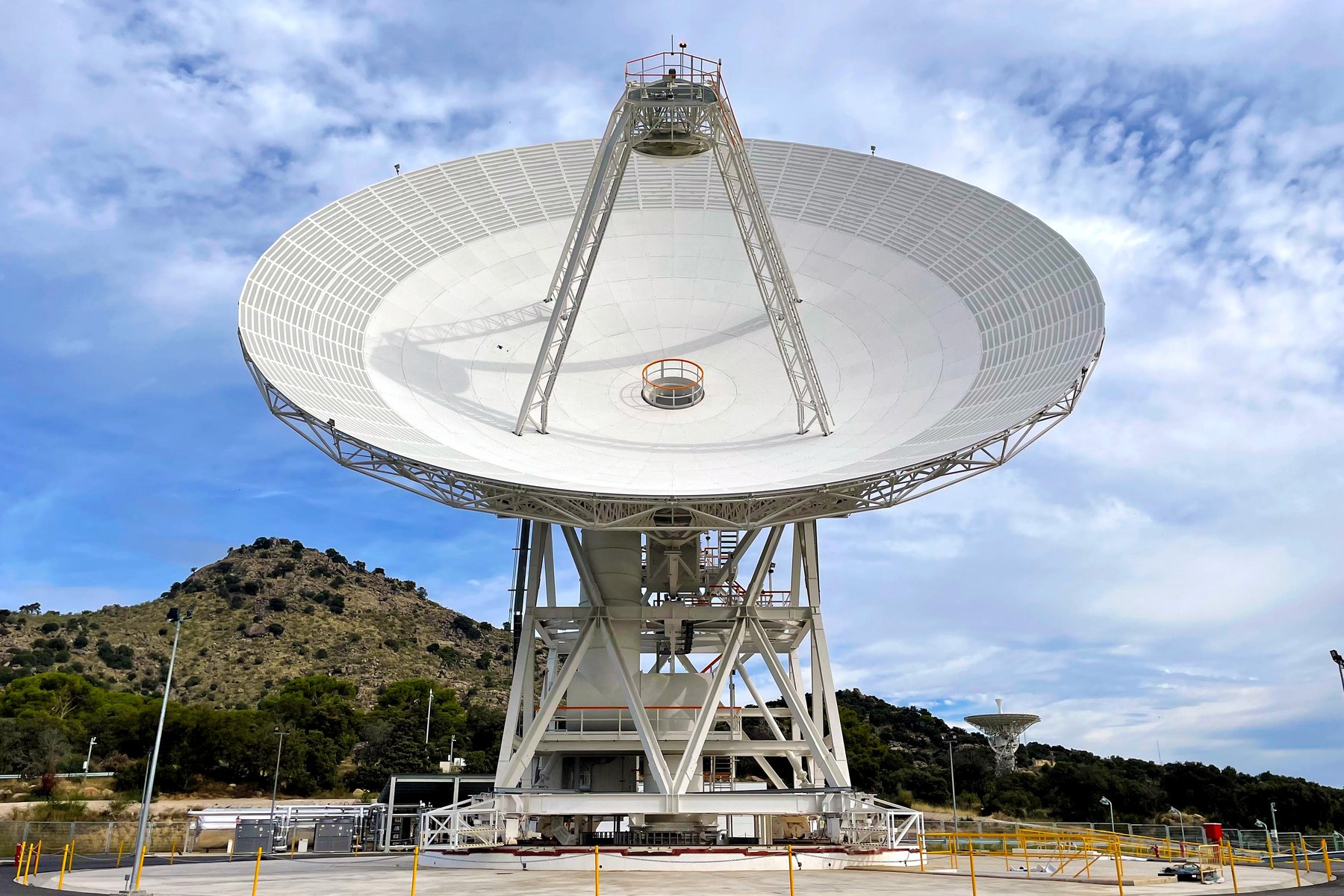
Do You Need a Licence for a Satellite Ground Station? How Earth Station Licensing Works
Do you need a ground station licence? How the FCC, Ofcom and the ITU treat satellite earth stations, from receive-only dishes to gateways and GSaaS.
Every satellite depends on antennas on the ground, whether they send commands, carry internet traffic or simply receive television feeds. People building or renting these sites often ask: do you need a licence for a ground station?
Usually you do, if it transmits. This explainer sets out the rules in the United States and the UK, the international layer from the International Telecommunication Union, and the changes the FCC is making to how ground stations can serve foreign satellites.
The legal term is “earth station”
Regulators rarely say “ground station”. The Radio Regulations, the ITU treaty that allocates spectrum, and the national rules built on them use “earth station” for a station on the ground that communicates with a space station. A gateway for a broadband constellation, a teleport, a telemetry, tracking and command antenna, a flat-panel user terminal on a roof and a dish on a ship are all earth stations, though the rules treat them differently.
Two questions decide most cases. Does the station transmit, or only receive? And does it share its frequency band with terrestrial services such as fixed microwave links? The answers decide whether you need a licence, a registration or nothing, and how much coordination comes first.
United States: transmitting earth stations need FCC authorisation
The starting point is section 25.102(a) of the FCC’s rules, which you can read on eCFR: “No person shall use or operate apparatus for the transmission of energy or communications or signals by space or earth stations except under, and in accordance with, an appropriate authorization granted by the Federal Communications Commission.” It reflects section 301 of the Communications Act, which requires a licence for radio transmitters generally.
Section 25.115 sets out how to apply. “Commission authorization must be obtained for authority to operate a transmitting earth station”, filed electronically on FCC Form 312 with Schedule B.
There is a quicker route for simple cases. A fixed station transmitting to geostationary satellites in certain bands, such as 14.0-14.5 GHz, can file on Form 312EZ, and unless the FCC orders otherwise the application is deemed granted 35 days after the public notice accepting it for filing, if no objection is filed.
The rules provide for several kinds of earth station:
- Individual stations at a fixed site, with the option to license several antennas together if they sit within 1 second of latitude and longitude in shared bands, or 10 seconds in bands not shared with terrestrial services.
- Blanket licences, which the FCC defines as covering “multiple earth stations in the FSS or MSS” operated anywhere within a specified geographic area. This is how networks of small terminals are licensed, and operators may add remote terminals without prior approval once coordination is done.
- NGSO gateway earth stations, which connect a non-geostationary system to the network and may also be used for telemetry, tracking and command.
- Earth stations in motion on ships, aircraft and vehicles, which have their own sections of the rules.
The user terminal for a service such as Starlink is a transmitting earth station too, which is why each dish is covered by an authorisation, as our piece on how satellite internet is licensed explains.
Receive-only stations: registration, not a licence
A station that only receives does not transmit, so the rules are lighter. In the US, under section 25.115(b), receive-only earth stations in the fixed-satellite service “may be registered with the Commission in order to protect them from interference from terrestrial microwave stations in bands shared co-equally with the Fixed Service”. Registration is optional. It buys protection, not permission.
The rule adds a point many people miss: registration “confers no authority to receive and use signals or programming received from satellites”. Section 705 of the Communications Act, on unauthorised reception, still applies. A registration lasts 15 years from the date of filing.
Registration matters in practice. In the FCC’s Upper C-band transition, only “incumbent earth stations” on the FCC’s list qualify for reimbursement when they have to move, and the list depends on stations having been registered or licensed by set dates in 2018 and certified in 2019. Unregistered receive sites must still move but are not paid. Our article on the Upper C-band transition covers that scheme.
United Kingdom: Ofcom’s earth station licences
In the UK, earth station licences are granted by Ofcom under the Wireless Telegraphy Act 2006. Ofcom’s earth station page lists the main products:
- Permanent Earth Station, for fixed sites working with geostationary satellites;
- Transportable Earth Station, mainly for outside broadcast links;
- Earth Station Network, for terminals routed through a hub or gateway;
- Non-Geostationary Earth Station, for fixed sites working with non-geostationary satellites;
- Non-Fixed Satellite Earth Station, for bands outside the fixed-satellite service, typically telemetry, command and Earth observation downlinks.
Several are site licences covering stations within 500 metres of a centre point. For receive-only sites Ofcom says that “generally, receive-only earth stations are exempt from licensing”. An operator that wants protection in certain bands, including 3800-4200 MHz and 25.5-26.5 GHz, can apply for an optional Grant of Recognised Spectrum Access.
Non-geostationary gateways get closer scrutiny. Ofcom’s NGSO licensing page says it will “publish and invite comments on applications that we are considering authorising”, and applicants must show how their gateway or network can coexist with existing UK-licensed NGSO systems, systems with pending applications and co-frequency earth stations registered with the ITU. Ofcom’s separate work on earth stations in motion and gateway spectrum is covered in our note on Ofcom’s ESIM and gateway decisions.
Newsletter
Get Space Law Insider every Monday
One short email a week with the space law news and analysis worth your time. Free, and you can leave any time.
Coordination: the step before the licence
Where an earth station shares a band with terrestrial services, a licence alone is not enough. The FCC requires applicants in “frequency bands shared with equal rights between terrestrial and space services” to provide a frequency coordination analysis under section 25.203.
There is an international layer too. Under Article 9 of the Radio Regulations, administrations coordinate specific earth stations with terrestrial stations of other countries, and with earth stations transmitting in the opposite direction, before notifying them to the ITU. The ITU’s Radiocommunication Bureau training material sets out the provisions (Nos. 9.15, 9.17 and 9.17A) and explains that coordination is needed when the band is shared in that way and the station’s coordination area includes another country’s territory.
The coordination area is calculated under Appendix 7. The Radio Regulations define it as “the area surrounding an earth station sharing the same frequency band with terrestrial stations … beyond which the level of permissible interference will not be exceeded and coordination is therefore not required”. Coordination is the administration’s duty, so the operator supplies the data and the national regulator does the filing.
Talking to a foreign satellite from US soil
Many ground stations serve satellites licensed by other countries. In the US this is a market access question. Under section 25.137, earth station applicants “requesting authority to communicate with a non-U.S.-licensed space station” must provide technical and legal information about that satellite. For satellites licensed outside the World Trade Organization’s basic telecommunications commitments they must also show that US systems have effective competitive opportunities in the relevant foreign markets.
For conventional geostationary services the FCC keeps a Permitted Space Station List of US-licensed satellites and foreign satellites already approved for market access in certain fixed-satellite bands. An earth station can name those satellites without a fresh market access showing. Where the satellite is not on the list, the earth station application itself has been one route into the US market.
That is now changing. In July 2026 the FCC adopted a new Part 100 to replace Part 25. According to the further notice published on 26 October 2026, “In the Order, we eliminate the ability for applicants to receive U.S. market access via earth station”, while allowing special temporary authority for brief activities such as launch and early orbit operations, in-orbit testing and orbit changes. I found no Federal Register publication of the Part 100 order itself as of 25 November, so Part 25 still applies for now. Our article on the Part 100 further notice covers the rest of the package.
Ground station as a service
The change matters most for ground station as a service, where a company rents antenna time at its sites to many satellite operators, often from different countries. Under a model in which market access comes through the earth station licence, the ground station operator can add foreign customers through its own filings. Without it, the satellite operator may need its own US market access first.
The FCC has noticed. In the same further notice it records requests for an expedited route for telemetry, tracking and command only, data-only downlinks “generally or for earth observation”, and “streamlined market access entry to enable the ground station as a service business”. It asks how such a process might work, which communications should qualify and how to protect national security, and whether earth stations serving non-US space agency satellites need a special process. Comments were due on 25 November 2026 and replies are due on 28 December 2026.
What I would watch
The first is the Part 100 effective date. Until then, Part 25 applies and market access via earth station remains available.
The second is the replies due on 28 December. If the FCC creates a fast track for telemetry, command and data-only downlinks, US ground station networks could take foreign customers more easily than under either the old or the new rules.
The third is the UK. Ofcom’s practice of publishing NGSO gateway applications for comment gives competitors a say in who builds gateways, and coexistence between constellations looks set to be the main issue in them.
The fourth is receive-only registration. The Upper C-band transition shows that an unregistered receive site can lose out when a band is reallocated.
Questions people actually ask
Do you need a licence for a satellite ground station?
If it transmits, yes. In the US, section 25.102 of the FCC’s rules requires an FCC authorisation to operate any transmitting earth station, and in the UK Ofcom issues earth station licences under the Wireless Telegraphy Act 2006. Receive-only stations usually do not need a licence, although registering them can give interference protection.
What is the difference between an earth station and a ground station?
None in substance. “Earth station” is the legal term used in the ITU Radio Regulations and national rules; “ground station” is the everyday industry term.
Do receive-only satellite dishes need an FCC licence?
No licence is required, but receive-only stations in the fixed-satellite service may be registered with the FCC to protect them from interference from terrestrial microwave stations in shared bands. Registration lasts 15 years and does not give any right to receive or use programming.
How long does an FCC earth station licence take?
A simple fixed station that qualifies for Form 312EZ is deemed granted 35 days after the public notice accepting it for filing, if no objection is filed. Applications in shared bands or involving foreign satellites take longer.
Can a US ground station communicate with a foreign satellite?
Yes, but it needs authority to do so. Under section 25.137 the earth station applicant must provide information about the non-US-licensed satellite, unless it is already on the FCC’s Permitted Space Station List. The FCC’s new Part 100 order ends market access via earth station once it takes effect, and the FCC is consulting on a streamlined route for ground station as a service.
Who coordinates earth stations internationally?
National administrations do, under Article 9 of the ITU Radio Regulations. When an earth station’s coordination area, calculated under Appendix 7, includes another country’s territory, the administrations must coordinate before the station is notified to the ITU’s Radiocommunication Bureau.
Space Law Insider
Read the week in space law in five minutes
Every Monday we send one email with the new regulations, filings, cases and explainers published on Space Law Journal. Join practitioners, students and policy people who read it.

Anuj KumarEditor-in-Chief
Anuj Kumar is the founder of Legal Desire Media and publishes Fashion Law Journal and Space Law Journal.
Space Law Journal is a joint initiative of Legal Desire Media and Odyogeek. Spotted something we got wrong, or want to respond? Write to space@legaldesire.com.