
The FAA’s Five Part 450 Proposals: Small Fixes, a 4 November Deadline and a Bigger Fight Behind Them
The FAA's five Part 450 proposals of 5 October 2026 explained: what changes for launch licence applicants, who benefits, and the 4 November deadline.
On 5 October the Federal Register carried five proposed rules from the FAA’s Office of Commercial Space Transportation, all aimed at the launch and reentry licensing regime in 14 CFR Part 450. The next day Transportation Secretary Sean Duffy announced them as “five actions to accelerate commercial space licensing”, with the line that “we can’t unlock the final frontier if we let red tape hold American innovators back.”
The rhetoric is large. The proposals themselves are not. Read one by one, they are careful corrections to specific paragraphs of a rule that took effect in March 2021 and that industry has complained about ever since. That makes them useful to anyone actually preparing a licence application, and it makes them a good guide to where the FAA thinks Part 450 has been asking for more than it needs. They also need to be read alongside a far more ambitious proposal from July that has received much less attention outside the industry.
Background: Part 450 and the executive order
Part 450 was the FAA’s attempt to replace several prescriptive licensing rules with a single performance-based one. The final rule was published in December 2020 (85 FR 79566) and took effect on 10 March 2021. Instead of telling operators exactly how to show safety, it set risk criteria, such as an individual probability of casualty of no more than 1 in a million for members of the public, and asked applicants to demonstrate how they met them. For background on how the regime works, see our Part 450 explainer.
The complaint from operators was that performance-based rules can produce more paperwork, not less, because the applicant has to justify every method it uses. On 13 August 2025 the President signed Executive Order 14335, “Enabling Competition in the Commercial Space Industry”, which directed the Secretary of Transportation to “reevaluate, amend, or rescind” Part 450. Each of the five October proposals says it is issued in furtherance of that order.
The policy target has since grown. The National Space Transportation Policy, issued as National Security Presidential Memorandum 17 on 20 August 2026, says US space transportation ranges “must grow to support more than 1,000 launches and reentries every year” by 2030.
The five proposals
All five were published on 5 October 2026 with a comment deadline of 4 November 2026.
1. Streamlining flight safety analysis methodology (91 FR 63190, docket FAA-2026-9936). This is the one with the most practical effect. A flight safety analysis under Part 450 is built from a series of sub-analyses in sections 450.117 to 450.139: trajectory, debris, population exposure, flight hazard areas, blast effects, toxic hazards and so on. Today, every description of a sub-analysis method must address all six items listed in section 450.115(c). The FAA proposes to keep three of those items for each method (scientific principles and statistical methods with their assumptions, and evidence of verification and validation) and to move the other three (the rationale for the level of fidelity, how benchmark conditions compare with the intended operation, and how risk mitigations were accounted for) into a new section 450.115(d), to be addressed once for the analysis as a whole. The FAA says it “only needs to review these items once.” It also cleans up cross-references and replaces “methodology” with “methods” throughout.
2. Simplifying physical containment (91 FR 63185, docket FAA-2026-9934). Physical containment is the hazard control strategy in which the vehicle simply does not have enough energy for its hazards to escape a cleared area. The current section 450.110(b) contains a conflict: it requires a hazard area built under the probabilistic analysis in section 450.133, but also requires all hazards to stay inside that area, even though a section 450.133 area only covers hazards above the risk criteria. The FAA proposes a single requirement for a flight hazard area defined by the vehicle’s maximum potential energy, with no section 450.133 analysis needed for phases where containment is the only strategy. It also corrects an admitted drafting omission: reentry vehicles were left out of the definition of physical containment and parts of section 450.110.
3. A lightning exception (91 FR 63199, docket FAA-2026-9940). Section 450.163 currently requires operators either to avoid lightning through flight commit criteria or to harden the vehicle. Operators have been getting equivalent level of safety determinations for a third approach, clearance. The proposal codifies it: no lightning mitigation is needed for a descending phase of flight if, once the vehicle reaches an altitude where lightning is foreseeable, its flight path is clear of the public and critical assets. Applicants using the exception would submit a method for determining the limits of the flight path, representative limits, and a description of how the area will be cleared.
4. Blast effects: deleting “hypothetical” (91 FR 63204, docket FAA-2026-9941). Section 450.137(c)(6) asks for tabular data showing “the hypothetical location of any member of the public” exposed to far-field overpressure above the risk criteria. Applicants asked whether that meant they had to imagine where people might be. The FAA says it never did: the point is to identify existing windows where people could be hurt by glass breakage. The fix is to delete the word.
5. Electronic applications (91 FR 63180, docket FAA-2026-9935). Section 413.7(a) currently allows applications only on paper, by email or on a physical storage device, which would stop applicants using the FAA’s new Licensing Electronic Application Portal, LEAP, without a waiver. The proposal adds “other electronic method approved by the Administrator”, removes the paper option (the FAA says no licensed operator has filed on paper in two decades), and aligns waiver, alternative time frame and safety element approval requests with the same methods. The FAA is also asking whether it should go further and make an approved electronic method mandatory.
Written for reusable boosters
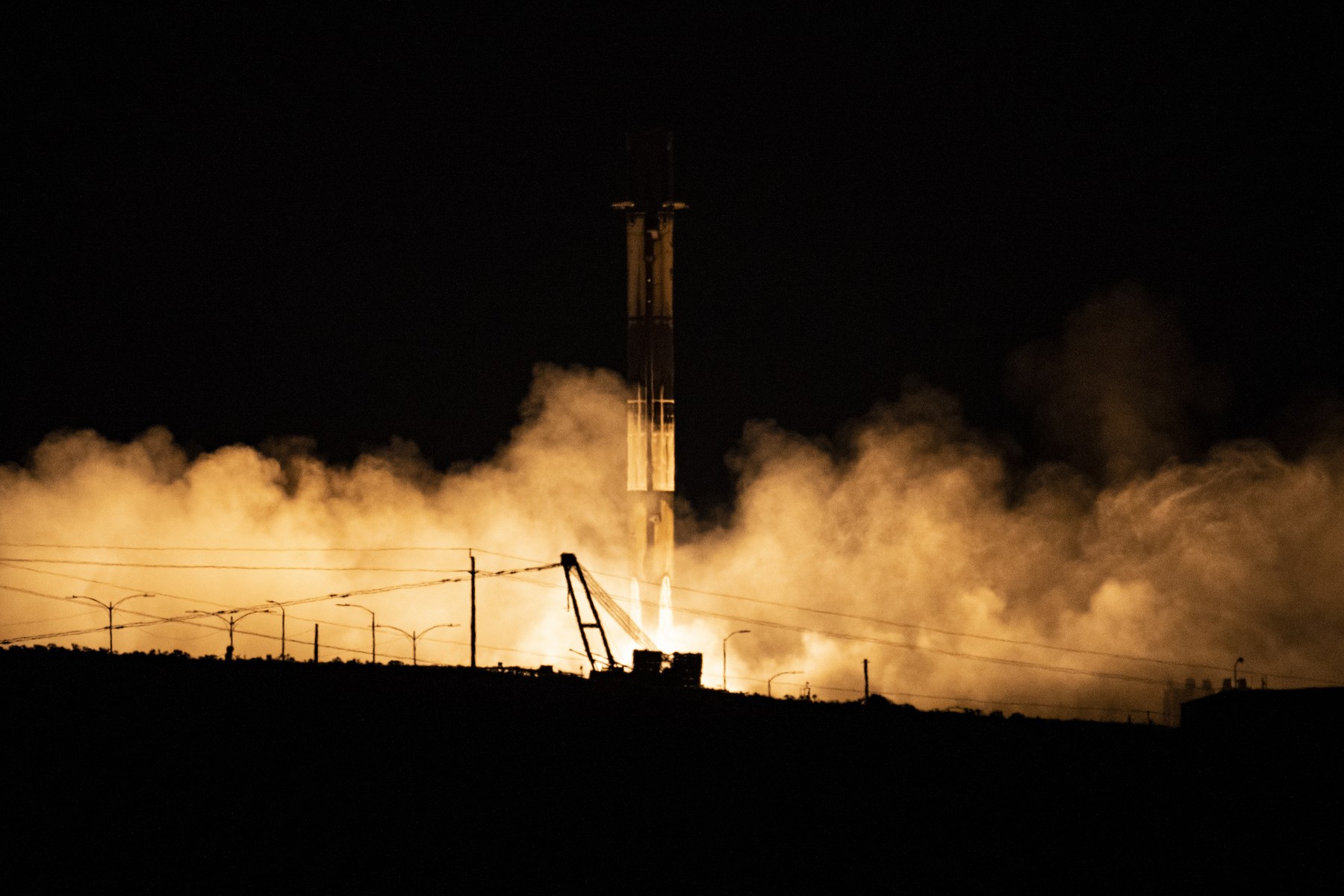
Two of the proposals share a worked example. The physical containment NPRM describes “the final landing burn of a first stage returning to a barge”, where depleted propellant and low velocity physically limit how far any hazard can reach. The lightning NPRM says a first stage returning to a barge in a cleared area “could likely use this exception for the final phases of flight”. If part of the area around the barge is not otherwise cleared, the operator could still use the exception by watching that area to make sure it stays clear.
That is a clear signal of whose operations the FAA has in mind. Booster recovery is now routine, and every return flight is a phase that Part 450 must analyse. Removing the probabilistic hazard area analysis and the lightning mitigation requirement for those final phases will save the most work for operators that recover boosters often.
How much will it save?
The FAA does not put a number on it. For the flight safety analysis proposal, it says it lacks the data to quantify savings but expects “a considerable reduction in the cost of compliance.” It does offer some striking figures on its own workload. There were 17 new licence applications in the past five years and 179 modification requests, about 35 a year. For one licensee, six modifications in a single year took 10,747 FAA hours. For another, 13 modifications took 6,846 hours. Flight safety analysis, the agency says, “takes up a significant amount of this time”.
Those numbers explain the design of the package. Most of the FAA’s licensing effort goes into modifications to existing licences, not new ones, and much of a modification is re-running and re-documenting analyses. Proposals that let an applicant justify fidelity and benchmarks once, rather than for every sub-analysis, are aimed squarely at that.
None of the five changes the safety criteria in section 450.101. The FAA certifies that the flight safety analysis and containment proposals would not have a significant economic impact on a substantial number of small entities, and OMB did not treat the flight safety analysis proposal as a significant regulatory action.
The bigger proposal behind them
The October package should not be read in isolation. On 30 July 2026 the FAA published a far more consequential proposal, Waiver of Specified Statutory Requirements for Commercial Space Launch and Reentry Actions (91 FR 47997). Relying on 51 USC 50905(b)(2)(C), which allows the Secretary to waive requirements of US law for a licence or permit where they are not necessary to protect public health and safety, safety of property, and national security and foreign policy interests, it would waive provisions of 13 laws for launch site, reentry site, vehicle and experimental permit licences. The list starts with the National Environmental Policy Act and includes the Endangered Species Act, Clean Water Act, Clean Air Act, Coastal Zone Management Act, National Historic Preservation Act and Marine Mammal Protection Act. It would also reach related actions such as airspace closures and leases of federal land to operators.
The comment period on that proposal closed on 31 August 2026. I have not found a final rule in the Federal Register. If it is adopted in anything like its proposed form, it will almost certainly be challenged, and the scope of the section 50905 waiver power will be tested in court.
The contrast with current practice is sharp. On 14 October the FAA published a notice of intent to prepare a programmatic environmental impact statement for increased Starship-Super Heavy operations at Starbase, Texas and expanded Starship landing and expenditure locations, with scoping comments due by 30 November. For now, NEPA review remains the rule.
What it means for operators and their lawyers
For applicants with filings in progress, the flight safety analysis proposal is the one to study. If finalised, it will change how methods documentation is organised, and early engagement with FAA evaluators on how they will apply the new section 450.115(d) could save time. Operators that recover boosters at sea or on land should look closely at the containment and lightning proposals and consider whether the conditions match their concept of operations, including the surveillance the lightning exception may require.
The changes do not touch the financial responsibility and cross-waiver regime in Part 440, so the insurance and contract structures discussed in our pieces on cross-waivers and space insurance are unaffected. But faster approval of modifications means licence terms will change more often, and launch services agreements should be clear about who bears the cost and schedule risk of a pending modification.
Comments matter more than usual here. Several of the proposals expressly ask for data. The FAA wants evidence on savings, and in the electronic filing NPRM it wants views on mandating the portal. Operators who think the containment or lightning conditions are too narrow should say so now, because a final rule can only go as far as the proposal and the record allow.
What I would watch
The first is the 4 November deadline and the comments filed. The interesting question is whether operators ask the FAA to go further, for instance by extending the containment approach to other phases of flight.
The second is what comes next. Acting Deputy FAA Administrator Liam McKenna called these proposals “just the beginning”. The notice numbers on the five documents run from 26-18 to 26-25 with gaps, which is at least consistent with more Part 450 proposals in the pipeline.
The third is the July waiver proposal. It is the item in this programme with real legal risk, and the first test of how far section 50905 can be stretched.
The fourth is how the FAA meets the targets in the National Space Transportation Policy. The FAA has also asked for comments, due 26 October, on siting new spaceports and priority airspace for launch corridors. Paperwork reductions help, but more than 1,000 launches and reentries a year will depend at least as much on ranges, airspace and environmental approvals as on the drafting of Part 450.
Questions people actually ask
What did the FAA propose on 5 October 2026?
The FAA published five notices of proposed rulemaking to streamline commercial launch and reentry licensing: Streamlining Flight Safety Analysis Methodology Means of Compliance, Simplifying Physical Containment Requirements, Lightning Hazard Mitigation Burden-Reducing Exception, Overpressure Blast Effects Analysis Burden Reducing Clarification, and Digital Modernization for Licensing Electronic Application Submissions. They appear at 91 FR 63180 to 63204.
When is the comment deadline for the FAA Part 450 proposals?
Comments on all five proposals are due by 4 November 2026. They can be filed on regulations.gov under the relevant docket numbers, which run from FAA-2026-9934 to FAA-2026-9941.
Do the proposals change the Part 450 safety criteria?
No. The public risk criteria in 14 CFR 450.101, including the limit of a 1 in a million individual probability of casualty for members of the public, are unchanged. The proposals change how applicants document and demonstrate compliance and add limited exceptions for physical containment and lightning.
What is the lightning exception in the FAA proposal?
Under the proposed change to 14 CFR 450.163, an operator would not need to use a lightning mitigation method for a descending phase of flight if, once the vehicle descends to an altitude where lightning is foreseeable, its flight path is clear of members of the public and critical assets. The FAA gives a first stage returning to a barge as an example.
Why is the FAA changing Part 450?
Executive Order 14335 of 13 August 2025 directed the Secretary of Transportation to reevaluate, amend or rescind the Part 450 regulations to streamline commercial licensing. The National Space Transportation Policy of 20 August 2026 set a goal of supporting more than 1,000 launches and reentries a year by 2030.
Is the FAA also proposing to waive environmental laws for launches?
Yes, in a separate proposal published on 30 July 2026. It would use the Secretary of Transportation’s waiver power under 51 USC 50905(b)(2)(C) to waive provisions of 13 laws, including NEPA and the Endangered Species Act, for FAA launch and reentry licences and permits. The comment period closed on 31 August 2026, and no final rule had been published as of mid-October 2026.

Anuj KumarEditor-in-Chief
Anuj Kumar is the founder of Legal Desire Media and publishes Fashion Law Journal and Space Law Journal.
Space Law Journal is a joint initiative of Legal Desire Media and Odyogeek. Spotted something we got wrong, or want to respond? Write to space@legaldesire.com.