ISS Retirement in 2030: The Deorbit Plan and What Replaces It
NASA still plans to bring the ISS down at the end of 2030, using a $843 million SpaceX deorbit vehicle it will own. But a Senate bill says 2032, Russia has just signed on to 2030, and the commercial replacement plan changed three times this year. What the deorbit means under the Liability Convention, and the legal framework the ISS leaves behind.
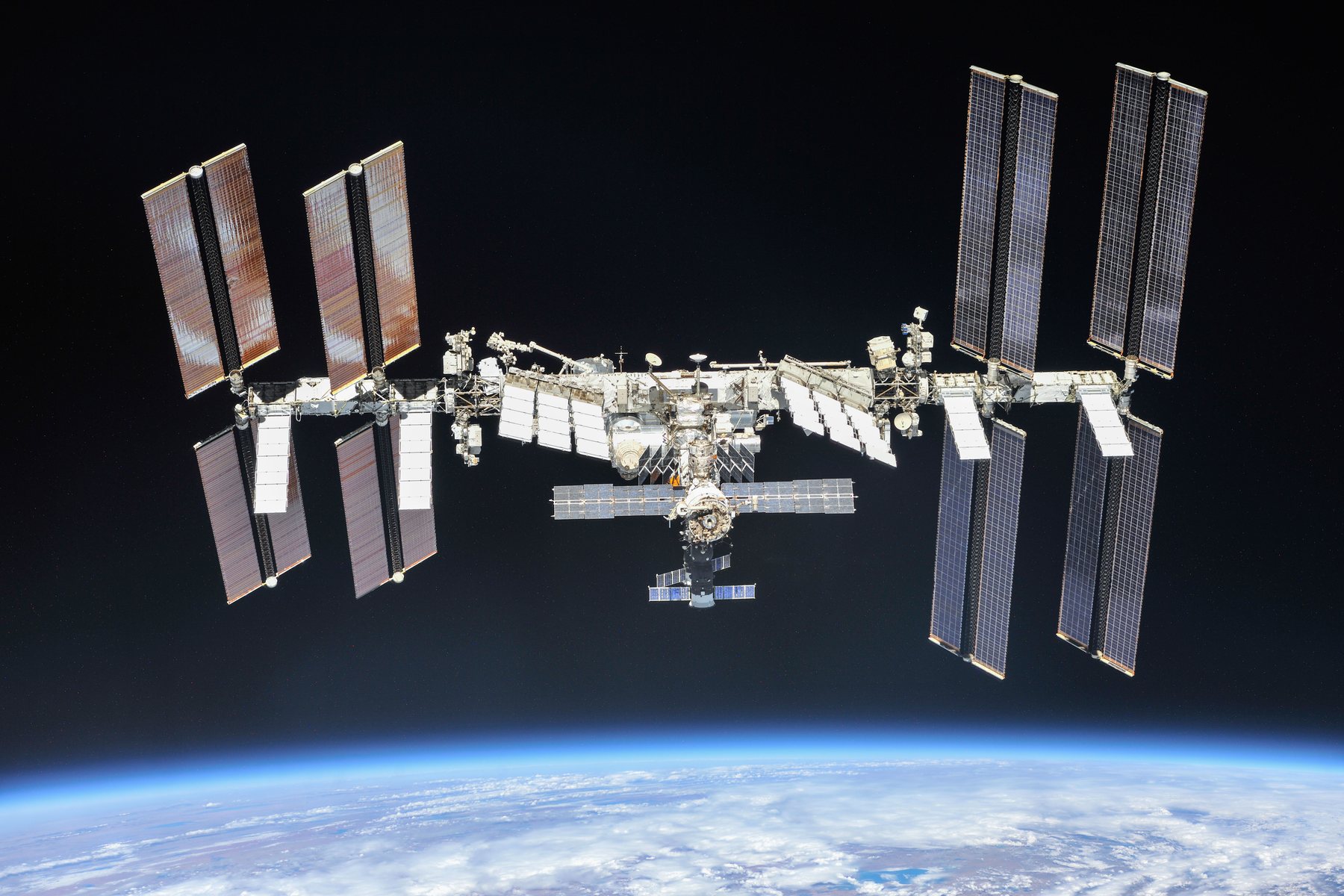
The International Space Station has been continuously occupied since November 2000. For a generation of engineers, scientists and lawyers, it has simply been there. It is the most expensive single object humans have ever built, and it is also the most successful piece of international space law in operation: fifteen governments, one legal framework, and a quarter of a century without the partners taking each other to court.
It is also getting old. The Russian segment’s transfer tunnel has been leaking for years, and the United States and Russia still disagree about how serious the leaks are. NASA has said since early 2022 that the station will be retired in 2030. The question of how it comes down, and what takes its place, has become one of the most consequential decisions in civil space. It has more legal content in it than the headlines let on.
How you deorbit a 420-tonne space station
You cannot just let the ISS fall. It is roughly the size of a football field, and large parts of it, including the truss and some of the heavier pressurised modules, would survive reentry. An uncontrolled fall could scatter debris anywhere under its orbital path, which covers most of the world’s population.
NASA looked at the alternatives and rejected them. Boosting the station to a higher parking orbit would take more than twice the energy of a controlled deorbit and would leave a large object in a busier debris environment. Taking it apart and bringing pieces home was never realistic, because the modules were not built to be disassembled. The transition plan settled on a three-stage approach: let the orbit decay naturally, lower it deliberately with the station’s own propulsion, then fire a final reentry burn to put whatever survives into an unpopulated patch of ocean.
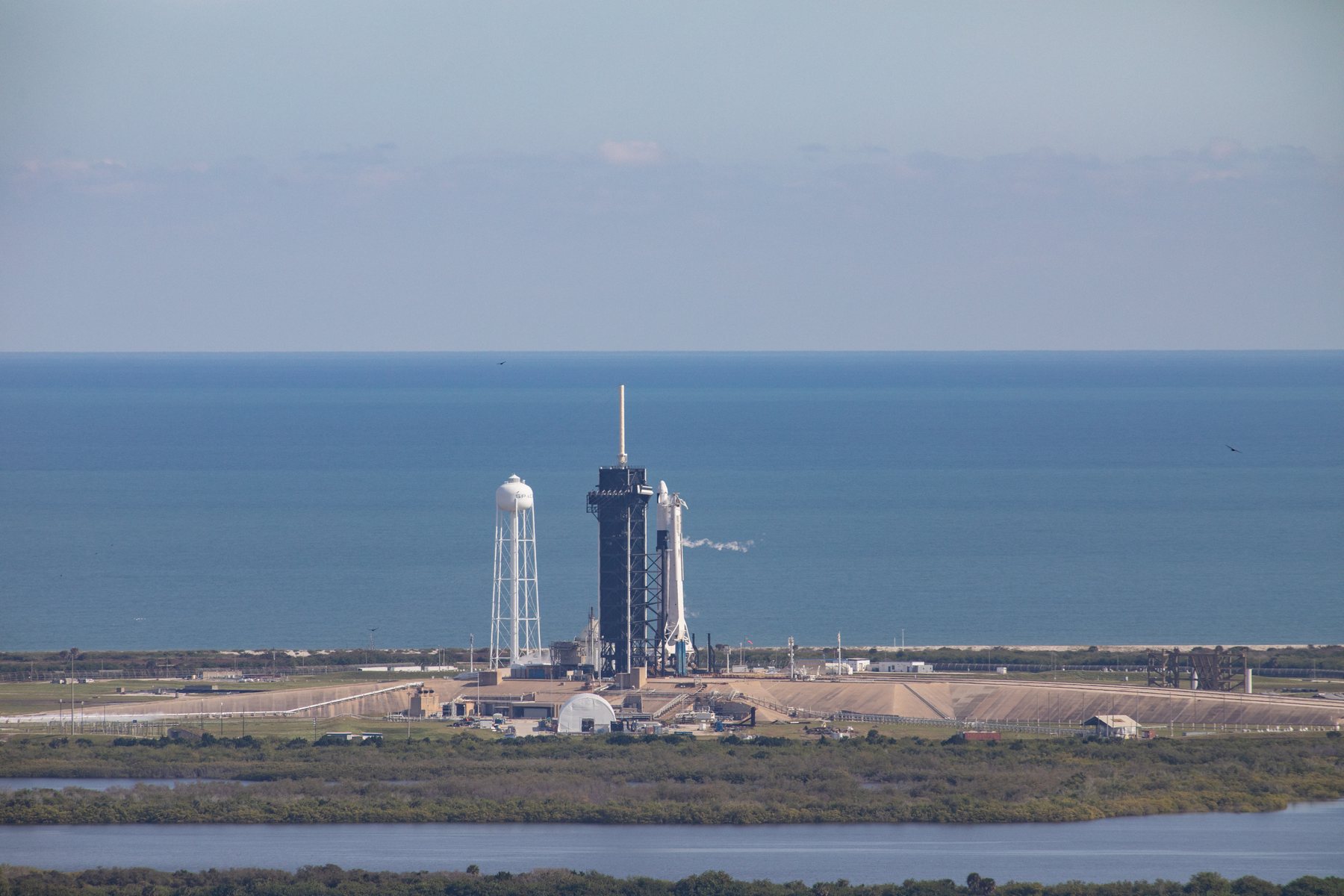
The original plan relied on three Russian Progress cargo ships for that last burn. That changed after 2022. In June 2024 NASA awarded SpaceX a contract worth up to $843 million to build the US Deorbit Vehicle, an enlarged Dragon with a far bigger propellant load. NASA has put the full cost, including launch, at around $1.5 billion. Unlike NASA’s commercial crew and cargo programmes, this is not a service purchase. NASA will own the vehicle, launch it and fly it. The primary target area is the remote South Pacific around Point Nemo, with a debris footprint roughly 2,000 kilometres long.
The GAO’s June 2026 report on the transition, GAO-26-107805, sets out the current timeline. Lowering begins in 2028. The deorbit vehicle launches and docks in mid-2029. The final burn comes at the end of 2030 or early 2031. And NASA faces what the GAO calls an immediate decision point in 2027: launch the deorbit vehicle on schedule, or extend the station.
Why “2030” is softer than it looks
Three things have happened this year that make the date less certain.
In December 2025 President Trump signed Executive Order 14369, which calls for “a commercial pathway to replace the International Space Station by 2030.” That reads like a firm end date. In practice it ties the end date to the replacement being ready.
In March 2026 the Senate Commerce Committee passed its NASA authorisation bill, which would require NASA to keep the ISS operating until 2032 and until at least one US commercial station can take over. The stated reason was blunt: the committee does not want China to become the only country with crews in Earth orbit. The bill has not yet passed the full Senate or the House, so this is not law. It is, however, a clear signal that Congress will not accept a gap.
And in July, Roscosmos and NASA agreed that Russia would stay on the station through 2030 and continue the arrangement under which each side flies the other’s crew members. Russia had previously committed only to 2028. That matters for the deorbit, because the Russian segment provides much of the station’s propulsion and attitude control. If Russia had left in 2028, the last two years would have been much harder.
So the honest summary is that 2030 remains the plan, the hardware is being built for it, and at least two branches of the US government are keeping the option of going later wide open. Whether the station itself can safely go later is a separate engineering question, and the leak in the Russian segment is the obvious reason for doubt.
Who owns the pieces, and who is liable when they fall
This is where the law gets interesting, and where the ISS is quite unlike anything else in orbit.
The station is governed by the 1998 Intergovernmental Agreement between the United States, Russia, Japan, Canada and the participating states of the European Space Agency. The IGA does not treat the ISS as one object. Each partner registers and owns the elements it provides, and keeps jurisdiction and control over them and over its own nationals aboard. The US owns Destiny and the truss, Russia owns Zvezda and the Russian modules, Europe owns Columbus, Japan owns Kibo. Legally the ISS is a set of national objects bolted together.
Now apply the Liability Convention to the deorbit. For damage on the surface of the Earth, liability under the Liability Convention is absolute. The state liable is the launching state of the space object that caused the damage. If a surviving piece of a Russian module fell outside the target area and hit a ship, the claim would in the first instance lie against Russia, as launching state of that module, even though the burn that brought it down came from a vehicle owned and flown by NASA. If it were a piece of Columbus, which flew up on the Space Shuttle, the launching states would include both the United States and the European states that procured its launch.
The IGA anticipates this in general terms. Article 16 contains the famous cross-waiver, under which the partners and their contractors give up claims against each other for damage arising from station operations. That is why the ISS partners have never sued one another. But the cross-waiver only covers claims between the partners. It does nothing for a third state or its nationals. For those claims, Article 17 keeps the Liability Convention in place and requires the partners to “consult promptly on any potential liability, on any apportionment of such liability, and on the defense of such claim.”
In other words, the treaty that has governed the station for a quarter of a century sets up a negotiation for the worst case, not a rule. The chance of anyone being hurt is very small, which is the whole point of a controlled deorbit. But it is worth noticing that the largest planned reentry in history will be carried out by one partner on objects owned by four others, under a framework that leaves the allocation of any third-party loss to be agreed after the fact.
What replaces it: the policy has changed three times this year
NASA’s answer since 2019 has been commercial stations. NASA would stop owning a station and instead buy crew time and research capacity from private operators, alongside other customers. The Commercial LEO Destinations programme funded early design work by Blue Origin’s Orbital Reef team and Starlab, gave Axiom Space a contract to attach modules to the ISS, and signed unfunded agreements with others, including Vast.
That strategy has wobbled badly in 2026. On 24 March NASA announced a proposal, as part of its wider “Ignition” initiatives, to build and own a government core module, attach it to the ISS, and let commercial modules plug into it. Industry objected strongly, and on 1 June NASA reversed course, saying “the industry position will now shape the path forward.” A draft solicitation for the next phase followed on 7 July, for firm-fixed-price contracts with two or more providers to develop, certify and deliver commercial station services.
The money is the constraint. The GAO reports NASA officials saying in March that funding “may only be sufficient to support one commercial space station.” The agency estimates $1 to $1.5 billion is available for the programme between 2026 and 2031, with companies expected to raise the rest privately. For comparison, the ISS costs about $3 billion a year to operate. CSIS’s Clayton Swope puts it plainly: the core problem is “endemically insufficient funding,” not the companies.
And the hardware is running late. Vast, which is funding its first station entirely privately, has moved the launch of Haven-1 from 2026 to the first quarter of 2027. Haven-1 is a single-module station designed for short visits, not a full ISS replacement. Nobody expects a station with ISS-class capability to be flying and certified for NASA crews by 2030. The GAO notes NASA has not yet assessed how likely a gap in continuous US presence is, or how long it might last, and recommended that it do so.
Meanwhile China’s Tiangong has been continuously crewed since 2022. If the ISS comes down before a US commercial station is ready, Tiangong will be the only crewed station in orbit. That is what is really driving the Senate’s 2032 date.
The legal framework the ISS leaves behind
This is the part of the transition I think has been underestimated, and it matters well beyond the United States.
The IGA answers questions that no commercial station will be able to answer so neatly. Who owns each module? Who has jurisdiction over a Japanese astronaut who commits a crime in a European module? The IGA says each partner has criminal jurisdiction over its own nationals, with a consultation procedure where the victim is from another state. How are intellectual property rights handled when an invention is made aboard? Article 21 treats activity in each element as taking place in the territory of the state that registered it. And the cross-waiver means the partners, and every contractor down their supply chains, cannot sue each other.
A commercial station will have none of that by default. It will be a US-registered space object, so under Article VIII of the Outer Space Treaty the United States will retain jurisdiction and control over it and over the personnel aboard. A European or Japanese astronaut flying as a paying customer will be aboard a US object under US jurisdiction, unless their government negotiates something different. Liability between the operator, its customers and their governments will be a matter of contract. Criminal jurisdiction, data protection, export control over research done on board, and medical responsibility for a crew member who falls ill will all have to be worked out case by case.
And there is still no US agency with clear authority to license a private space station as such. The FAA licenses the launch and reentry of the crew and cargo vehicles. The FCC licenses the radios. Operating a crewed habitat in orbit falls into the gap we wrote about last week in our piece on in-orbit servicing and mission authorisation. The Office of Space Commerce’s new certification pilot lists commercial inhabitable stations as one of the novel activities it is meant to cover. But the certificate is voluntary and, in the pilot’s own words, has “no direct legal effect.”
For the other ISS partners, the question is sharper still. Under the IGA, Europe, Japan and Canada paid in hardware and services and received guaranteed access in return. On a commercial station they become customers. That is a change in status, not just in price, and it is one reason ESA ministers asked in September for options on European access to low Earth orbit after the ISS, to be decided at the December ministerial.
What I would watch
Four things will tell us which way this goes over the next year.
The first is the 2027 decision on the deorbit vehicle. Once NASA commits to launching it in 2029, the end date becomes very hard to move. If that decision slips, 2030 is effectively gone.
The second is whether the NASA authorisation bill passes with the 2032 date intact. A statutory requirement to keep flying until a commercial station is ready would change the legal default from “retire on schedule” to “retire when replaced.”
The third is the final commercial station solicitation and how many awards it makes. One award means one US station, one operator and very little competition on price or terms for NASA or anyone else.
The fourth is whether anyone moves to fill the legal gaps before the first private station hosts foreign government astronauts. The most likely vehicle is a set of bilateral agreements between the United States and its former ISS partners, covering jurisdiction, liability waivers and access on commercial stations. Nobody has started negotiating them in public.
The ISS will come down eventually. The hardware is well understood. The legal architecture that made it work was a 1998 treaty between governments that trusted each other enough to waive claims and share jurisdiction. What replaces it will be built on contracts and national licences. Whether that turns out to be simpler or much messier depends on work that has barely started.
Questions people actually ask
When will the International Space Station be retired?
NASA plans to operate the ISS through 2030 and to carry out the final deorbit burn at the end of 2030 or in early 2031, according to the Government Accountability Office’s June 2026 report GAO-26-107805. NASA faces a decision in 2027 on whether to launch the US Deorbit Vehicle in 2029 as planned or extend operations. A Senate Commerce Committee bill passed in March 2026 would require operations until 2032, but it has not become law.
How will the ISS be deorbited?
The station’s orbit will be allowed to decay and then lowered deliberately, starting around 2028. In mid-2029 a SpaceX-built US Deorbit Vehicle, an enlarged Dragon spacecraft that NASA will own and operate, is due to dock with the station. It will perform the final reentry burn to bring the station down over a remote area of ocean, with the South Pacific around Point Nemo as the primary target. SpaceX’s contract is worth up to $843 million, and NASA has estimated the total cost at about $1.5 billion.
Who is liable if ISS debris causes damage on Earth?
Under the Liability Convention, the launching state of the space object that causes damage on the surface of the Earth is absolutely liable. Because each ISS partner registers and owns the elements it provided, liability would depend on which module the debris came from. The ISS Intergovernmental Agreement’s cross-waiver covers only claims between the partners. For third-party claims, Article 17 of the agreement requires the partners to consult on potential liability and on how it should be apportioned.
What will replace the International Space Station?
NASA intends to buy services from commercial space stations rather than own a successor. Companies developing stations include Axiom Space, Starlab, Blue Origin’s Orbital Reef team and Vast, whose first single-module station, Haven-1, is due to launch in early 2027. NASA released a draft solicitation for the next phase of its commercial station programme on 7 July 2026, after dropping a March 2026 proposal to build a government-owned core module. China’s Tiangong station is also crewed and operating.
Is Russia staying on the ISS until 2030?
Yes. In July 2026 Roscosmos and NASA agreed that Russia would continue ISS operations through 2030, extending its previous commitment from 2028, and would continue the seat-swap arrangement under which each side launches the other’s crew members without an exchange of funds.
How will law on commercial space stations differ from the ISS?
The ISS is governed by the 1998 Intergovernmental Agreement, which allocates ownership, jurisdiction, criminal jurisdiction, intellectual property rules and a cross-waiver of liability among the partners. A commercial station will be a nationally registered space object under Article VIII of the Outer Space Treaty, with the registering state holding jurisdiction over it and the people aboard. Most other relationships, including liability between the operator and its customers, will be governed by contract and national licensing. In the United States no agency yet has clear authority to license the operation of a private space station.

Anuj KumarEditor-in-Chief
Anuj Kumar is the founder of Legal Desire Media and publishes Fashion Law Journal and Space Law Journal.
Space Law Journal is a joint initiative of Legal Desire Media and Odyogeek. Spotted something we got wrong, or want to respond? Write to space@legaldesire.com.