Space Law Cases: The Disputes That Shaped the Field
Space law has little case law of its own, so most of the rules operators rely on were made in ordinary courts. From Cosmos 954 and the launch-waiver cases to asteroid claims, moon rocks, Devas v Antrix and the Starlink challenges, these are the disputes that shaped the field.
Ask a space lawyer for the leading cases in their field and you will usually get a pause. Space law is built on five UN treaties, and states have almost never taken each other to court over them. There is no international space court, and the International Court of Justice has never decided a space case.
Yet there is a body of case law that shapes how the industry works, and most of it was made by ordinary judges deciding ordinary disputes. Who pays when a rocket fails? Can a satellite insurer sue the launch provider? Can anyone own an asteroid? What happens when a state cancels a spectrum contract? Can a losing bidder overturn a NASA award? The answers came from contract cases in California and Maryland, a forfeiture case in Florida, procurement fights in the Court of Federal Claims and a long arbitration saga that has now reached the US Supreme Court.
This explainer walks through the disputes I think matter most, grouped by the question they answer, and says why each one still matters.
Cosmos 954: the one real test of the Liability Convention
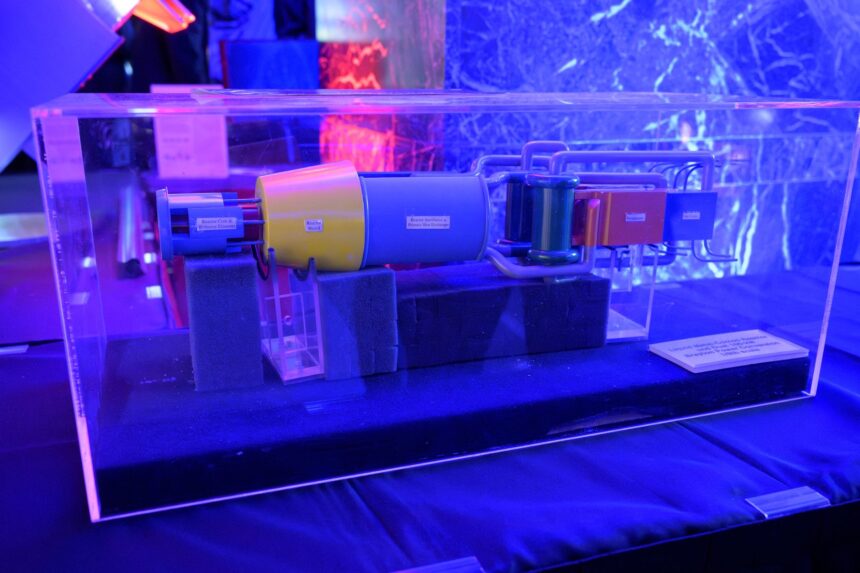
On 24 January 1978 the Soviet satellite Cosmos 954, which carried a small nuclear reactor, re-entered over northern Canada. Radioactive debris was scattered across the Northwest Territories, Alberta and Saskatchewan, and Canada spent months finding and clearing it.
Canada claimed C$6,041,174.70 from the Soviet Union, relying on the 1972 Liability Convention. Under Article II of that treaty, a launching state is absolutely liable for damage its space object causes on the surface of the Earth, meaning the claimant does not have to prove fault. The claim, as summarised by JAXA’s space law library, also reserved further claims and interest.
The dispute never reached a claims commission. On 2 April 1981 the two governments signed a Protocol in Moscow under which the Soviet Union paid C$3 million “in full and final settlement” of all matters connected with the crash, including “the claim advanced by Canada”. The Protocol itself does not mention the Liability Convention, and the Soviet Union never accepted that it was liable under it.
Cosmos 954 is still described, for example by McGill’s Institute of Air and Space Law, as the only known time a state has claimed against another for damage caused by a space object. That tells you something about how the treaty works in practice. Absolute liability gave Canada a strong opening position, but the outcome was a negotiated sum at about half the claim. For more on how the fault-based rules apply in orbit, see our piece on space debris liability.
Who carries the risk of a failed launch
The most practical body of space case law is about launch contracts. Three US cases from the late 1980s and early 1990s set the rules that launch services agreements still follow.
The first is Appalachian Insurance Co. v. McDonnell Douglas Corp., decided by the California Court of Appeal on 29 August 1989. The Westar VI satellite was deployed from the Space Shuttle on 3 February 1984, but the nozzle of its upper stage motor broke up and left it stranded in a useless low orbit. The insurers paid Western Union about $105 million and then sued McDonnell Douglas, Morton Thiokol and Hitco for negligence and strict liability. The court upheld summary judgment for the defendants. The contracts contained a “no-fault, no-subrogation, inter-party waiver of liability”, and the court held that the waiver was clear, was not unconscionable and did not offend public policy. Because insurers step into the shoes of the satellite owner, they were bound by the same waiver. Westar VI was later recovered by the Shuttle on mission STS-51A in November 1984, along with Palapa B-2.
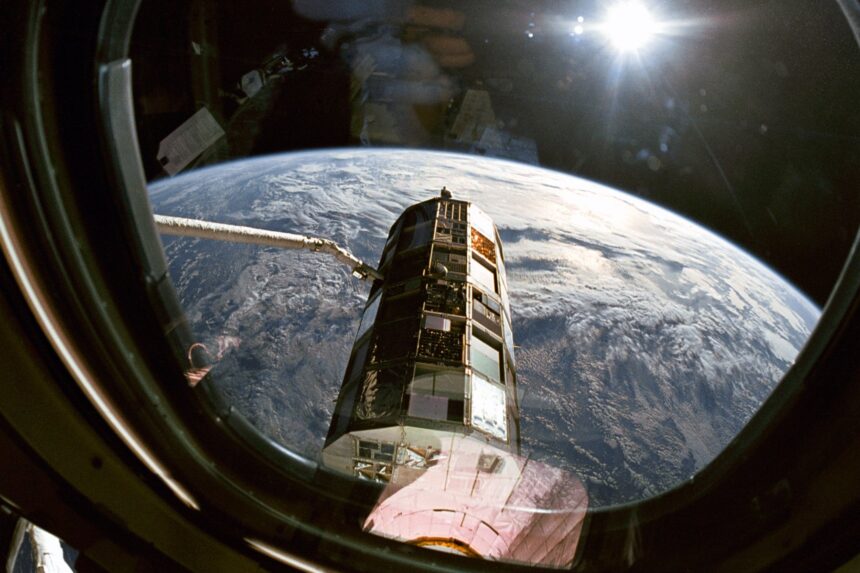
The second is Martin Marietta Corp. v. INTELSAT, 991 F.2d 94, decided by the Fourth Circuit on 21 October 1992 and amended in 1993. Intelsat 603 was launched on a Commercial Titan III on 14 March 1990, but because of what the court called “Martin Marietta’s wiring mistake” the satellite failed to separate from the rocket’s second stage. INTELSAT sought $400 million. The trial court threw out all of INTELSAT’s counterclaims, reasoning that the 1988 amendments to the Commercial Space Launch Act overrode Maryland’s rule that a party cannot waive liability for gross negligence. The Fourth Circuit disagreed. It affirmed the dismissal of the negligence claims but revived the breach of contract and gross negligence claims, finding “absolutely no support” for reading the federal statute as protecting gross negligence, not least because the contract was signed in 1987.
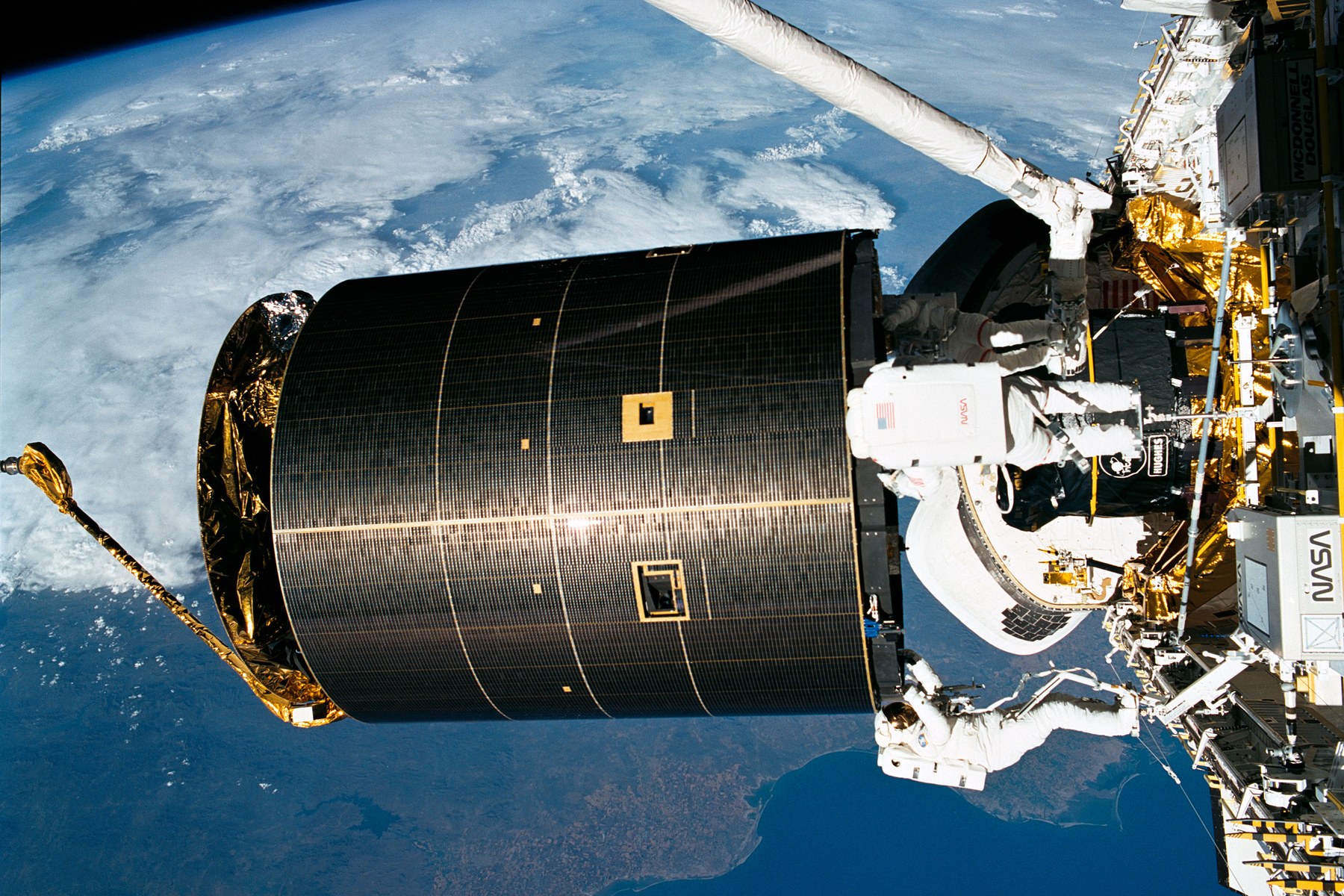
Read together, these two cases give the modern rule. Cross-waivers between sophisticated parties will generally be enforced against ordinary negligence claims, including claims by insurers. They are much less safe when the conduct is grossly negligent. That is why the waiver clauses explained in our launch services agreement guide are drafted so carefully. Intelsat 603 was itself captured and reboosted by Endeavour’s crew on STS-49 in May 1992, the moment shown in the photograph above.
The third case puts the government on the other side of the table. In 1985 Hughes signed a launch agreement under which NASA would use its “best efforts” to launch ten Hughes satellites on the Shuttle. After the loss of Challenger in January 1986, the President announced that NASA would no longer launch commercial satellites, and Hughes was taken off the manifest. The government argued that this was a sovereign act it could not be sued for. The trial court agreed, but the Federal Circuit reversed in 1993 in Hughes Communications Galaxy v. United States, 998 F.2d 953. A breach was found on remand and damages of $102,680,625 were awarded, measured by the extra cost Hughes paid to launch on expendable rockets instead. The Federal Circuit affirmed that award on 13 November 2001, 271 F.3d 1060. The lesson for anyone contracting with a government launch provider is that a policy change does not automatically cancel the government’s contractual duties.
Who can own what: asteroids and moon rocks
The Outer Space Treaty bans national appropriation of celestial bodies, but it says less about private claims. A handful of US cases have tested the edges.
In Nemitz v. United States, Gregory Nemitz had registered a claim to the asteroid 433 Eros. When NASA’s NEAR Shoemaker spacecraft landed on Eros on 12 February 2001, he sent NASA a bill for $20 in “parking” fees, at 20 cents a year. NASA refused, and he sued. The federal district court in Nevada dismissed the case on 26 April 2004, holding that registering a claim with a private registry and filing under the California Commercial Code created no property right in an asteroid, and that his constitutional claims, including a takings claim, failed. The Ninth Circuit affirmed in an unpublished decision. The case is small, but it is still the clearest US ruling that a private person cannot simply claim a celestial body. The bigger policy debate, now shaped by the Artemis Accords and national resource laws, is covered in who owns the Moon and our piece on the Moon Agreement.
Moon rocks have produced more litigation than asteroids. In United States v. One Lucite Ball Containing Lunar Material, 252 F. Supp. 2d 1367 (S.D. Fla. 2003), a goodwill Apollo 17 sample given to Honduras had been sold to a private buyer, who was caught in a 1998 NASA sting. The court ordered it forfeited because it had been stolen from Honduras. In Davis v. United States, decided on 13 April 2017, the Ninth Circuit showed the limits of that approach. A NASA inspector general agent who detained a 74-year-old widow during a sting at a Denny’s restaurant, over a small piece of lunar material she was trying to sell, was denied qualified immunity on her claim that the detention was unreasonable.
Two more cases show the limits of the government’s claim. Nancy Lee Carlson bought an Apollo 11 lunar sample bag for $995 at a 2015 US Marshals auction. When NASA tried to keep it, a federal judge in Kansas held on 14 December 2016 that she had good title as a good-faith buyer, noting that “NASA was a victim in this case, not a wrongdoer”. The bag sold at Sotheby’s on 20 July 2017 for $1,812,500. In Cicco v. NASA, a woman who said Neil Armstrong had given her a vial of moon dust sought a declaration that she owned it. The court dismissed the case on 17 April 2019 for lack of jurisdiction, because NASA had not taken any action she could challenge.
The overall picture is that US law treats lunar samples from the Apollo programme as government property that can be followed and recovered, while courts insist on proper process and protect good-faith buyers where the government itself let the item go.
Devas v Antrix: the spectrum deal that will not end
If one dispute shows how commercial space now meets international finance, it is Devas v Antrix. On 28 January 2005 Antrix, the commercial arm of the Indian space agency, agreed to lease S-band satellite capacity to Devas Multimedia. On 25 February 2011 Antrix terminated the agreement, citing force majeure after the government decided to reserve the spectrum.
Devas won an ICC arbitration, and on 14 September 2015 the tribunal awarded it $562.5 million plus interest. A US district court later entered judgment for about $1.29 billion. Indian courts went in the opposite direction. The Supreme Court of India, in a judgment of 17 January 2022, upheld orders winding up Devas on the ground that it had been set up for a fraudulent purpose, and Indian courts have set the ICC award aside.
Devas’s foreign investors also brought treaty claims. In CC/Devas v. India, under the India-Mauritius bilateral investment treaty, a tribunal found an expropriation in 2016 and on 13 October 2020 awarded $111.296 million plus interest. Deutsche Telekom won a separate final award on 27 May 2020.
The US enforcement case reached the Supreme Court. In CC/Devas (Mauritius) Ltd. v. Antrix Corp., 605 U.S. 223, decided unanimously on 5 June 2025, the Court held that under the Foreign Sovereign Immunities Act, personal jurisdiction over a foreign state exists when an immunity exception applies and service is properly made, with no extra “minimum contacts” test. On remand, the Ninth Circuit ruled on 12 August 2026 that jurisdiction was consistent with the Fifth Amendment and that forum non conveniens is not available as a defence under the New York Convention, as reported by Freshfields. The trial court must now decide how much weight to give the Indian set-aside.
The practical point for anyone holding a spectrum or capacity contract with a state entity is that winning an award is only the start. Enforcement against a sovereign can take more than a decade and runs through several legal systems at once. Spectrum rights themselves are explained in our piece on ITU spectrum and orbital slots.
Fighting over government contracts
Procurement cases have done a lot to shape who gets to launch for the US government.
In April 2014 SpaceX sued the United States in the Court of Federal Claims over the Air Force’s sole-source “block buy” of 36 rocket cores from United Launch Alliance. Judge Susan Braden briefly blocked payments for Russian RD-180 engines that spring. The case ended with a settlement on 23 January 2015 under which the Air Force opened more national security launches to competition and sped up SpaceX’s certification. It never produced a judgment, but it changed the market.
The second fight was over the Moon. When NASA gave SpaceX the Artemis Human Landing System award, worth about $2.94 billion, Blue Origin and Dynetics protested. The GAO denied the protests on 30 July 2021. Blue Origin then sued in the Court of Federal Claims. On 4 November 2021 Judge Richard Hertling ruled for the government, in an opinion made public on 18 November. He held that Blue Origin lacked standing because it had no substantial chance of winning the award, given that its price exceeded NASA’s available funds, and that NASA’s evaluation was not arbitrary. The case is now the main reference point for anyone thinking about challenging a NASA commercial award.
Constellations, the environment and the courts
The newest line of cases concerns large constellations and the environment. Three decisions have all gone the same way.
In Viasat v. FCC, decided on 26 August 2022, the DC Circuit dismissed Viasat’s environmental challenge to an FCC order allowing SpaceX to fly Starlink satellites in lower orbits. It found that Viasat’s theory of harm from debris was too speculative and its economic complaints fell outside the National Environmental Policy Act. In International Dark-Sky Association v. FCC, decided on 12 July 2024, the same court upheld the FCC’s partial approval of 7,500 second-generation Starlink satellites, accepting that the FCC could rely on a categorical exclusion from environmental review. We covered that case in detail in our case note. And on 15 September 2025, a federal judge in Washington upheld the FAA’s environmental assessment for SpaceX’s Starship launches at Boca Chica, rejecting the claim that a full environmental impact statement was needed.
The result is that, so far, US courts have not required full environmental review for mega-constellations or their launch programmes, and have set a high bar for who can bring such challenges. The pressure on debris and night-sky impacts has instead come through regulation, such as the FCC’s five-year deorbit rule.
What I would watch
The first is the Devas trial court on remand. How a US judge weighs an Indian court’s decision to set aside an ICC award will matter well beyond this case, for any operator with a contract with a foreign state or state-owned company.
The second is whether anyone brings a second Liability Convention claim. Debris has fallen on land several times in recent years, including a large metal ring that came down in a Kenyan village in December 2024, but none has produced a formal claim between states that I can confirm. As launch rates rise, the odds of a case that tests fault in orbit or absolute liability on the ground go up.
The third is the move from government to private stations and lunar landers. Every earlier generation of space business produced its own cases, from launch failures to spectrum deals. Commercial stations, lunar cargo and paying passengers will do the same, and the first wave of those disputes will most likely turn on contract wording drafted today.
Space law’s case law is thin, but it is not empty. It just tends to arrive through the side door, in courts that were not thinking of themselves as space courts at all.
Questions people actually ask
What is the most important space law case?
There is no single leading case, because the space treaties have almost never been litigated. The most cited disputes are Canada’s claim against the Soviet Union over Cosmos 954, the only known claim under the Liability Convention, settled in 1981 for C$3 million; Martin Marietta v. INTELSAT (4th Cir. 1992), on launch contract waivers and gross negligence; and Devas v. Antrix, decided by the US Supreme Court on 5 June 2025, on enforcing awards against a state-owned space company.
Has anyone ever made a claim under the Liability Convention?
Only once, as far as is publicly known. Canada claimed C$6,041,174.70 from the Soviet Union after the nuclear-powered satellite Cosmos 954 scattered radioactive debris over northern Canada on 24 January 1978. The two states settled by a Protocol signed on 2 April 1981, under which the Soviet Union paid C$3 million without accepting liability under the Convention.
Are cross-waivers in launch contracts enforceable?
Generally yes, against ordinary negligence. In Appalachian Insurance v. McDonnell Douglas (1989), a California court enforced a no-fault inter-party waiver against the satellite’s insurers. In Martin Marietta v. INTELSAT (1992), the Fourth Circuit upheld the waiver against negligence claims but allowed claims for gross negligence and breach of contract to go ahead, because Maryland law does not allow gross negligence to be waived.
Can a private person own an asteroid or a moon rock under US law?
Not an asteroid, on current authority. In Nemitz v. United States (D. Nev. 2004, affirmed by the Ninth Circuit), a private registration of a claim to asteroid 433 Eros created no property right. Moon rocks from the Apollo missions are treated as US government property, but a court held in 2016 that Nancy Lee Carlson had good title to an Apollo 11 sample bag she bought in good faith at a government auction.
What is the Devas v Antrix case about?
It concerns a 2005 agreement under which Antrix, the commercial arm of India’s space agency, leased S-band satellite capacity to Devas Multimedia. Antrix terminated it in 2011. Devas won a $562.5 million ICC award in 2015, which Indian courts later set aside, and investors won separate treaty awards against India. The US Supreme Court ruled on jurisdiction on 5 June 2025, and the Ninth Circuit sent the enforcement case back to the trial court on 12 August 2026.
Can a company challenge a NASA contract award?
Yes, through a protest to the GAO and then a bid protest in the Court of Federal Claims, but it is hard to win. Blue Origin’s challenge to SpaceX’s 2021 Human Landing System award was denied by the GAO on 30 July 2021 and rejected by the Court of Federal Claims on 4 November 2021, which held that Blue Origin lacked standing because it had no substantial chance of winning the award.

Anuj KumarEditor-in-Chief
Anuj Kumar is the founder of Legal Desire Media and publishes Fashion Law Journal and Space Law Journal.
Space Law Journal is a joint initiative of Legal Desire Media and Odyogeek. Spotted something we got wrong, or want to respond? Write to space@legaldesire.com.