From 25 to 456 Launches a Year: The FAA Opens Its Biggest Starship Environmental Review Yet
The FAA's Starship environmental review at Starbase will test up to 456 launches a year. What the October 2026 notices cover, the Florida reviews and deadlines.
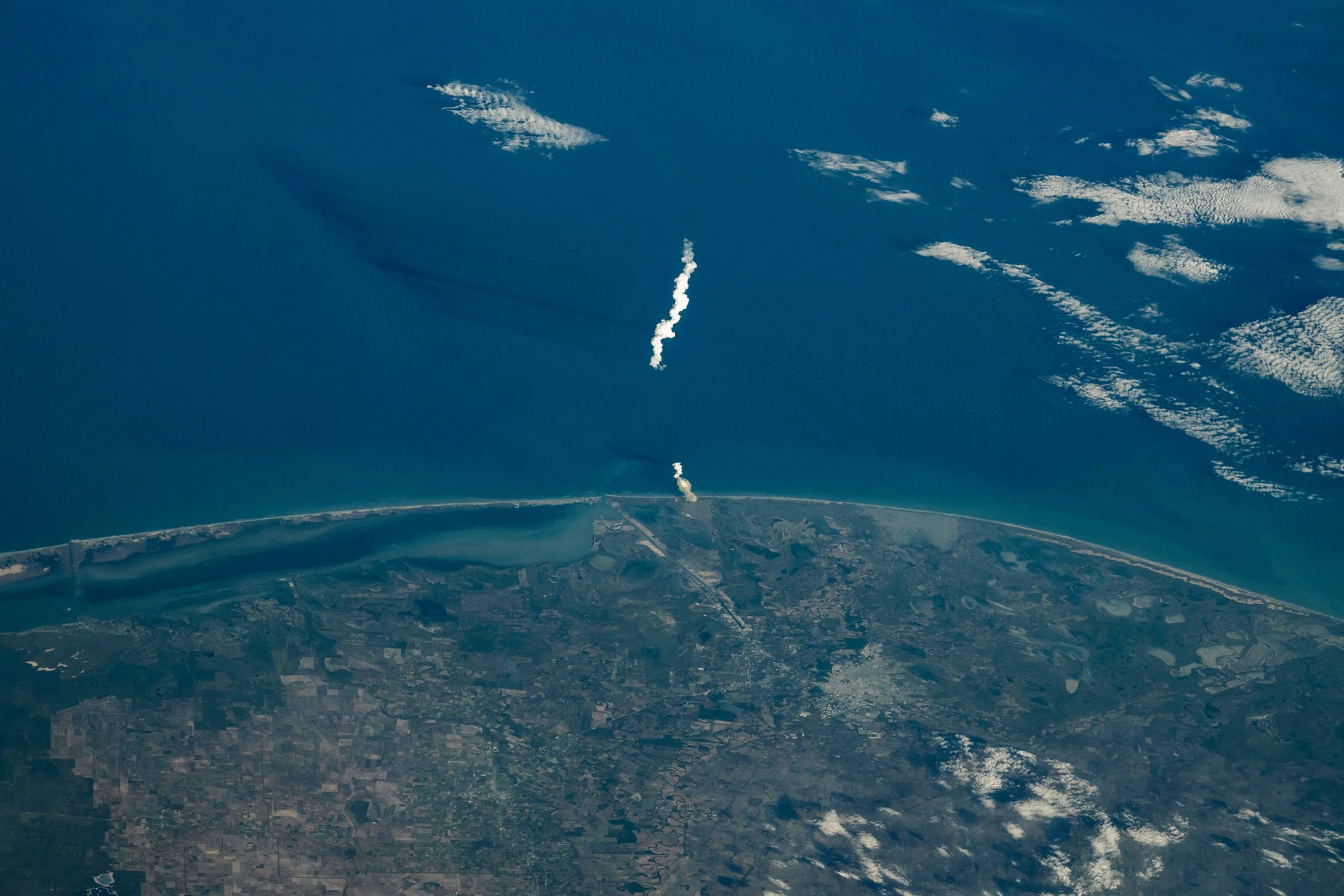
The number in the Federal Register notice is 456. That is how many Starship launches a year SpaceX wants the FAA to assess from its Starbase site in south Texas, more than eighteen times the 25 a year it is licensed for now. On 14 October 2026 the FAA published a notice of intent to prepare a programmatic environmental impact statement (91 FR 65289) for that proposal, together with an expansion of the places where Starship can land or be expended.
It is not the only Starship review on the FAA’s desk. On 29 September the agency opened a supplemental impact statement for Starship at Space Launch Complex 37 in Florida, and the same weeks brought reviews for Blue Origin’s New Glenn, ocean reentries and Relativity’s Terran R. This is where much of the licensing work for the next decade of heavy launch is being done, while a separate FAA proposal would remove much of the environmental review requirement altogether.
What the Starbase notice proposes
The notice describes the current baseline plainly. SpaceX “is authorized by FAA to conduct up to 25 annual launches and 50 total annual landings” at the Boca Chica Launch Site. That cap comes from the FAA’s 2025 tiered environmental assessment and mitigated finding of no significant impact for increased Starship cadence, noticed on 12 May 2025.
The new proposal comes in two phases.
Phase 1 would allow up to 100 launches and 200 landings a year (100 of Starship and 100 of Super Heavy). Launches and landings “could occur at any day or time of the week”.
Phase 2 would allow up to 456 launches from, and 912 landings at, the site each year. Launches could occur at any time of day but only Monday to Friday. The FAA describes this as “a mature program launching more than 100 times annually” that “would be implemented within several years”.
For the analysis the FAA will assume that half of all launches and landings happen at night, between 10 p.m. and 7 a.m. Super Heavy would land at the site, make a soft water landing in the Gulf of America or be expended in flight. Starship would land at the site, make a soft water landing in the Gulf or the “broad open ocean”, or be expended in the open ocean. Launch azimuths would range from 40 to 115 degrees.
Two points of scope matter legally. First, the notice says that “subsequent license modifications or renewals under 14 CFR part 400 are within the scope of the PEIS”, and that temporary airspace closures are part of the FAA’s federal action. Second, the 456 and 912 figures are framed as an outer bound: “Any currently unforeseen, future proposed increase in launch or landing cadence would require additional NEPA review.”
One alternative, and why that is lawful
The notice considers only the proposed action and a No Action Alternative. The FAA’s reasoning is that Starbase “already has the necessary infrastructure”, so other sites “are not reasonable alternatives and do not meet the purpose and need of this project”. Under No Action, SpaceX would keep operating at the cadence approved in 2025.
A single action alternative may look thin, but it fits the FAA’s own definition of reasonable alternatives as those that are technically and economically feasible, meet the purpose and need “and, where applicable, meet the goals of the applicant”. When the decision is a private applicant’s licence for a specific site, the applicant’s goals narrow the field.
The Supreme Court has also made such choices harder to attack. In Seven County Infrastructure Coalition v Eagle County, decided on 29 May 2025, the Court said that “Courts should afford substantial deference and should not micromanage those agency choices” about the scope of an environmental review. That decision has already been applied to Starbase. On 15 September 2025 Judge Carl Nichols of the US District Court for the District of Columbia rejected a challenge by the Center for Biological Diversity and others to the FAA’s original programmatic environmental assessment for Starship. As the Texas Tribune reported, he found that “parts of its analysis left something to be desired” but that even those parts fell “within a broad zone of reasonableness”.
Procedural objections to alternatives or scope now face a more deferential court than they did when Starbase was first approved. Our note on Dark-Sky Association v FCC shows the same pattern in satellite licensing, where the FCC’s categorical exclusion survived review.
What the impact statement will cover
The list of resource areas in the notice is long: air quality and aviation emissions, biological resources, coastal resources, Department of Transportation Act section 4(f) properties, Land and Water Conservation Fund Act section 6(f) land, farmland, hazardous materials, historic and cultural resources, land use, natural resources and energy, noise, socioeconomics and children’s health, visual effects and water resources.
Alongside the NEPA process, the FAA is starting National Historic Preservation Act section 106 consultation, consulting the US Fish and Wildlife Service and the National Marine Fisheries Service under section 7 of the Endangered Species Act, and consulting the Fisheries Service under the Magnuson-Stevens Act on essential fish habitat.
Those consultations are often where the real conditions come from. The 2025 approval was a “mitigated” finding of no significant impact, so the conclusion depended on mitigation commitments. At four or eighteen times the current cadence, noise, beach and road closures and effects on protected species will be harder to mitigate away, which is presumably one reason the FAA has moved to a full impact statement.
The Florida track: SLC-37 and LC-39A
The Florida picture is different because the Department of the Air Force went first. Its 2025 environmental impact statement for Starship at SLC-37 analysed up to 76 launches and 152 landings a year and concluded that, with mitigation and adaptive management, the project would not have significant impacts “except for noise”. The Air Force signed its record of decision on 20 November 2025, noticed on 18 December 2025, authorising construction and up to 76 launches a year, pending supplementation by the FAA.
The FAA was a cooperating agency but issued no decision, because SpaceX had not yet applied to modify its licence. It now has. The FAA’s 29 September notice (91 FR 61551) explains that the Air Force statement did not analyse temporary airspace closures, section 4(f) resources, a proposed contingency landing area in the Atlantic, or the full range of return to launch site trajectories. The supplement will fill those gaps. The contingency landing area would begin at least one nautical mile offshore and run from 50 miles north of Launch Complex 39A to 50 miles south of SLC-37. Starship landings are proposed in the Atlantic, Pacific and Indian Oceans and the Gulf of America. Scoping comments closed on 14 October.
Next door, at NASA’s Kennedy Space Center, the FAA issued its final impact statement and record of decision for Starship at Launch Complex 39A in February 2026, covering up to 44 launches a year.
Add the numbers and the three sites together are being assessed for up to 576 Starship launches a year. Nobody expects that figure soon. But environmental approvals set ceilings, and a ceiling approved in a programmatic document can be relied on for years.
The rulebook: Order 1050.1G
All of this is being done under FAA Order 1050.1G, the agency’s NEPA procedures dated 30 June 2025. It replaced Order 1050.1F after the Council on Environmental Quality withdrew its own government-wide NEPA regulations, first by an interim final rule effective 11 April 2025 and then by a final rule in January 2026. Four features of the new order shape what happens next.
The first is length. The text of an impact statement “will not exceed 150 pages”, or 300 pages for an action “of extraordinary complexity”. A Starbase statement covering two phases, two vehicles, launch, landing, ocean expenditure and airspace closures is a plausible candidate for the higher limit.
The second is time. The order says the FAA “will complete the EIS not later than the date that is 2 years after” the notice of intent, tracking the deadline Congress added to NEPA in 2023. For Starbase that points to October 2028 at the latest.
The third is reliance. Under section 3.1(b), after completing a programmatic assessment or impact statement, the FAA “may rely on that document for 5 years” if there are no substantial new circumstances, and longer if it documents a reevaluation. Later licence modifications within its scope need only incorporate it and focus on site specific effects. This is why the “P” in PEIS matters to SpaceX: one well built document can carry many licence modifications.
The fourth is categorical exclusions. The FAA’s draft programmatic assessment for reentry vehicle operations in the marine environment, whose comment period closes today, 19 October, would use exactly this mechanism to create three new categorical exclusions for issuing, renewing and modifying licences and permits for ocean reentries within the scope it analyses. If adopted, many future capsule and vehicle splashdowns would need no new assessment at all.
The waiver proposal hanging over everything
There is a tension here that the FAA has not resolved. On 30 July 2026 it proposed waiving requirements under 13 laws (91 FR 47997), NEPA among them, for launch and reentry site licences, vehicle licences and experimental permits, using the Secretary of Transportation’s statutory power to waive a requirement that is not necessary to protect public health and safety, safety of property, and national security and foreign policy interests. We discussed it in our piece on the FAA’s five Part 450 proposals. Comments closed on 31 August. As of 19 October I have found no final rule in the Federal Register.
So the FAA is proposing to switch off the regime while running some of its largest reviews under it. There are sensible reasons to keep going. A licence modification built on a completed impact statement is far harder to challenge than one resting on a new and contested waiver, and a waiver that reaches the Endangered Species Act and historic preservation law, as the proposal would, is likely to be tested in court before anyone can rely on it. For SpaceX, a finished programmatic statement is the safer foundation for a programme meant to run for years.
I would not read the scoping notices as a signal that the waiver is dead. I would read them as the FAA keeping both doors open.
Who else is in the queue
Starship is the headline, but the same weeks produced other approvals that show the direction of travel.
Blue Origin has asked to increase New Glenn’s maximum cadence at Space Launch Complex 36 from 12 to 50 launches a year, with associated static fires, downrange booster landings on an ocean platform and fairing recovery. The FAA’s draft environmental assessment is open for comment until 30 October, with a virtual public meeting on 22 October.
For Relativity’s Terran R at Cape Canaveral, the FAA relied on the Space Force’s 2024 final supplemental environmental assessment and issued a finding of no significant impact and record of decision, noticed on 28 September.
The pattern is the same throughout: higher cadence, more reuse, more ocean recovery, and documents written to carry many future licence actions.
What it means for operators, communities and lawyers
For launch operators, environmental ceilings are now a commercial asset. A cadence cap in a finding or record of decision limits how many missions can be sold from a site, and launch services agreements that promise schedule flexibility should allow for the time it takes to raise it. Our earlier piece on Part 450 launch licensing explains how the environmental determination fits with the safety, policy and payload parts of a licence.
For communities around Boca Chica and on the Space Coast, scoping is where effort has most effect. Comments with data on noise, closures, wildlife or cultural sites will count for more than general objections, particularly now that courts defer heavily to the agency’s choices about what to study.
For lawyers thinking about challenges, the combination of Seven County, the Starbase ruling of September 2025 and the strict page limits changes the calculation. Order 1050.1G requires a responsible official to attest that any considerations “addressed briefly or left unaddressed” were, in the FAA’s judgment, “comparatively unimportant or frivolous”. A final statement will be defended on exactly that ground. Arguments that a document should have said more will be weaker than they once were. Arguments that it got the facts wrong, or ignored something central, remain.
What I would watch
The first is the scoping record. Comments close on 30 November, and the docket (FAA-2026-12808) will show whether Texas agencies, the federal wildlife agencies and local communities raise issues that push the FAA towards mitigation conditions or a narrower phase 1.
The second is the page limit. If the FAA declares the Starbase statement one of “extraordinary complexity” and uses up to 300 pages, that tells us how much analysis it thinks a 456 launch ceiling needs.
The third is the waiver rule. A final rule waiving NEPA for launch licences would raise immediate questions about whether reviews already under way continue, and would almost certainly be challenged.
The fourth is the reentry categorical exclusions. If they are adopted as proposed, ocean splashdowns within the analysed envelope will move from case by case review to a checklist. That is a quieter change than a 456 launch ceiling, but it may affect more operators.
For now, the FAA has not stopped doing environmental review for big launch programmes. It is doing it on a larger scale, with tighter limits, and with documents designed to last.
Questions people actually ask
How many Starship launches a year is the FAA reviewing at Starbase?
The FAA’s notice of intent of 14 October 2026 covers up to 456 launches and 912 landings a year at the Boca Chica Launch Site at Starbase, Texas, in two phases. Phase 1 would allow up to 100 launches and 200 landings a year. SpaceX is currently authorised for up to 25 launches and 50 landings a year under a 2025 tiered environmental assessment.
When is the deadline for comments on the Starbase Starship environmental review?
Scoping comments are due by 30 November 2026 through regulations.gov under docket FAA-2026-12808 or by post. The FAA will hold in-person scoping meetings in Brownsville on 17 November and Port Isabel on 19 November 2026, and a virtual meeting on 18 November, with English-Spanish translation.
What is a programmatic environmental impact statement?
It is an environmental impact statement covering a broad programme or a series of related actions rather than a single decision. Under FAA Order 1050.1G the FAA may rely on a completed programmatic document for five years, and longer after a documented reevaluation, so later licence modifications within its scope only need to address site specific effects.
Is the FAA also reviewing Starship launches from Florida?
Yes. On 29 September 2026 the FAA announced a supplemental impact statement for Starship at Space Launch Complex 37, Cape Canaveral, building on a 2025 Air Force statement that assessed up to 76 launches and 152 landings a year. In February 2026 the FAA issued a final impact statement and record of decision for up to 44 Starship launches a year at Launch Complex 39A.
Has the FAA waived NEPA for commercial launch licences?
Not yet. On 30 July 2026 the FAA proposed waiving requirements under 13 laws, including NEPA, for launch and reentry licences and permits. Comments closed on 31 August 2026. As of 19 October 2026 no final rule had been published in the Federal Register, and the FAA was continuing to run full environmental reviews.
How long can the FAA take to finish the Starbase impact statement?
FAA Order 1050.1G, reflecting the deadline Congress added to NEPA in 2023, requires an impact statement to be completed within two years of the notice of intent, measured to publication of the final statement. For the Starbase review that points to October 2028 at the latest, unless the FAA sets a new deadline after consulting SpaceX.

Anuj KumarEditor-in-Chief
Anuj Kumar is the founder of Legal Desire Media and publishes Fashion Law Journal and Space Law Journal.
Space Law Journal is a joint initiative of Legal Desire Media and Odyogeek. Spotted something we got wrong, or want to respond? Write to space@legaldesire.com.