The Liability Convention Explained: Who Pays When Space Objects Cause Damage
The Liability Convention explained: who is a launching State, absolute versus fault liability, how claims work, and the Cosmos 954 case that tested it.
If a piece of a rocket lands on a farm in another country, who pays? The answer in international law is set by one short treaty, the Convention on International Liability for Damage Caused by Space Objects, usually called the Liability Convention. It has 28 articles, has been used formally once, and is still the rule that every national licensing regime in the world is built around.
This explainer goes through what it says, how a claim works, and where it struggles with the way space is used today.
Where the Convention comes from
The principle is in Article VII of the 1967 Outer Space Treaty: a State that launches or procures the launch of an object, and a State from whose territory or facility it is launched, is internationally liable for damage the object causes. The Liability Convention turns that sentence into a working regime. It was adopted by the UN General Assembly in resolution 2777 (XXVI) on 29 November 1971, opened for signature on 29 March 1972 and entered into force on 1 September 1972.
According to the UN Office for Outer Space Affairs’ status table as at 1 January 2026, the Convention has 100 States parties and 18 States that have signed but not ratified. Four intergovernmental organisations, including the European Space Agency and EUMETSAT, have declared that they accept its rights and obligations under Article XXII. The United States, China, Russia, India, Japan, the United Kingdom and Canada are all parties. The text is on the UNOOSA website, and I set out the parent treaty in our Outer Space Treaty explainer.
Who is the “launching State”?
Everything turns on this definition. Under Article I(c), a launching State is “A State which launches or procures the launching of a space object” or “A State from whose territory or facility a space object is launched.” Article I(d) adds that a “space object” includes its component parts and its launch vehicle.
Those four connecting factors (launching, procuring, territory, facility) mean one object can easily have several launching States. A satellite owned by a company in country A, launched by a rocket from country B, from a site in country C, could make all three liable. Article V makes joint launchers jointly and severally liable, so a victim can claim the full amount from any of them, and leaves them to sort out contributions among themselves.
The Convention does not mention companies at all. If a private satellite causes damage, the claim is against the State, which then looks to its own national law to recover from the operator. That is the reason governments insist on licensing, insurance and indemnities, and why the registration of objects matters so much in practice, as I explained in our Registration Convention explainer.
Two standards: absolute on Earth, fault in space
Article II makes a launching State absolutely liable for damage its space object causes on the surface of the Earth or to aircraft in flight. The victim does not have to prove negligence. The only escape is in Article VI: exoneration to the extent the launching State shows the damage resulted from gross negligence, or an intentional act or omission, of the claimant State or the people it represents. Even that is unavailable if the launching State was itself acting in breach of international law, including the UN Charter and the Outer Space Treaty.
Article III takes the opposite approach for damage “elsewhere than on the surface of the earth”, meaning in orbit or beyond. There, a launching State is liable to another launching State “only if the damage is due to its fault or the fault of persons for whom it is responsible.”
Article IV deals with a collision in space that then causes damage to a third State. The two colliding States are jointly and severally liable to the third State: absolutely if the damage is on Earth or to aircraft, and on the basis of fault if it is to the third State’s own space object.
What counts as damage, and who is excluded
Article I(a) defines damage as “loss of life, personal injury or other impairment of health; or loss of or damage to property” of States, of natural or legal persons, or of international organisations. Whether it covers pure economic loss, such as revenue lost when a satellite is forced to manoeuvre, or environmental harm that is not damage to anyone’s property, is not settled by the text.
Article VII carves out two groups. The Convention does not apply to damage caused by a launching State’s object to that State’s own nationals; those cases are for domestic law. Nor does it apply to foreign nationals while they are taking part in operating the object, or while they are near a planned launch or recovery area at the launching State’s invitation. Those people are expected to be covered by contract, which is one reason launch contracts rely on cross-waivers.
How a claim works
Only States bring claims. Article VIII lets the State that suffered the damage, or whose nationals did, present the claim. If it does not, the State where the damage happened may claim, and failing both, the State where the victims were permanently resident. Claims go through diplomatic channels under Article IX, or through the UN Secretary-General if the two States have no diplomatic relations and are both UN members.
The time limit in Article X is one year from the damage or from identifying the liable launching State, with some flexibility where the claimant could not have known. Article XI says the claimant does not need to exhaust local remedies first, but it cannot run a Convention claim and a claim in the launching State’s courts for the same damage at the same time.
Compensation under Article XII is to be determined “in accordance with international law and the principles of justice and equity”, so as to restore the victim “to the condition which would have existed if the damage had not occurred.” There is no cap.
If diplomacy fails within a year of the claim documents being submitted, either side can ask for a three-member Claims Commission under Articles XIV to XX. Here the Convention loses much of its force. Under Article XIX(2), the Commission’s decision is “final and binding if the parties have so agreed”; otherwise it gives “a final and recommendatory award, which the parties shall consider in good faith.” I am not aware of any Claims Commission having been set up since the Convention entered into force.
The one real test: Cosmos 954
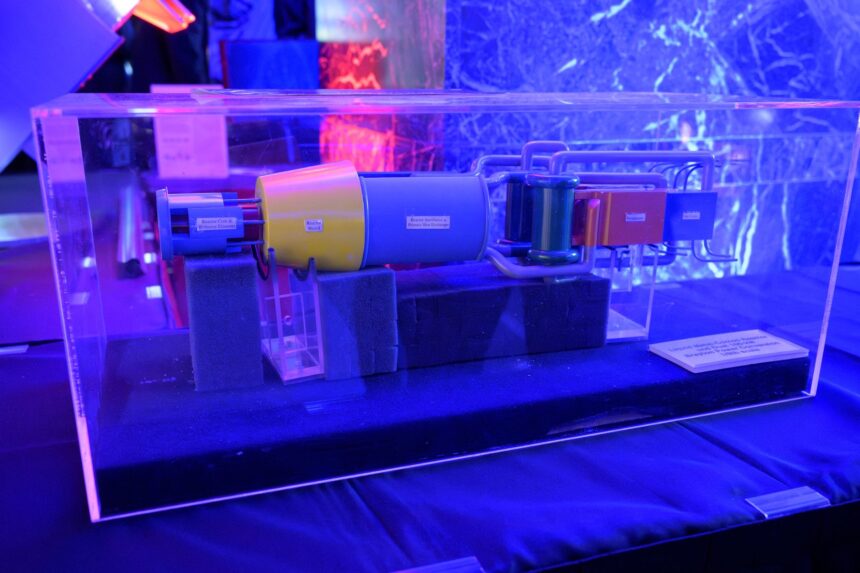
On 24 January 1978 the Soviet satellite Cosmos 954, which carried a nuclear reactor fuelled with enriched uranium, re-entered over Canada. Debris fell across parts of the Northwest Territories, Alberta and Saskatchewan, and Canada mounted a search and clean-up operation with US help.
Canada’s statement of claim relied “jointly and separately” on the Liability Convention, to which both States were parties, and on general principles of international law. It invoked Article II’s absolute liability and Article XII’s standard of compensation, and claimed C$6,041,174.70, limited to costs it said were reasonable, caused by the intrusion and calculable with reasonable certainty.
The case never reached a Claims Commission. Under a protocol signed in Moscow on 2 April 1981, the Soviet Union agreed to pay C$3,000,000 “in full and final settlement of all matters connected with the disintegration of the Soviet satellite” and Canada accepted it. The protocol does not admit liability under the Convention. I discussed the case alongside others in the space law disputes that shaped the field.
Why fault in orbit is the hard part
On 10 February 2009 the operational Iridium 33 and the decommissioned Russian satellite Cosmos 2251 collided about 790 kilometres above northern Siberia. NASA’s Orbital Debris Quarterly News called it “The first accidental hypervelocity collision of two intact spacecraft” and reported that 823 larger fragments had been catalogued by the end of March.
Put that collision through Article III and the difficulty is obvious. Was it anyone’s fault? One satellite was dead and could not move. The other could manoeuvre, but only if its operator had a warning it considered reliable and actionable. The Convention does not say what a reasonable operator must do, and there is no international standard that fills the gap. Fault is being defined slowly through national licence conditions, debris mitigation guidelines and operator practice, which I covered in our piece on who is liable for space debris. Damage from untraceable small fragments raises a further problem: a claimant has to identify the launching State before it can claim at all.
How the Convention reaches companies
Because the State carries the international liability, national laws pass it down. In the United States, launch and re-entry licensees must buy third-party liability insurance or show financial responsibility up to an amount set by the FAA under 51 U.S.C. section 50914, with a conditional government payment scheme above that level under section 50915. The UK has announced variable liability limits of £50 million, £20 million or £0 for orbital operations licence applications received after 1 December 2026. Canada’s Bill C-28, the proposed Canadian Space Launch Act now before Parliament, would let the transport minister require operators to indemnify the government, including against Liability Convention claims. For how the insurance side works in practice, see our space insurance explainer.
What I would watch
The first is re-entries from large constellations. Thousands of satellites are being designed to burn up at end of life. If surviving fragments start to land more often, Article II’s absolute liability will be tested in situations far less dramatic than Cosmos 954, and launching States will face claims for ordinary property damage.
The second is the first in-orbit claim. A collision between two active, manoeuvrable satellites of different States, with good tracking data on both sides, is the scenario most likely to push a State to argue fault under Article III, and to show whether conjunction warnings now define the standard of care.
The third is national caps. Several States are lowering or tiering the liability they pass to operators. That does not change what the State owes another State under the Convention, so lower domestic caps mean governments absorb more of the risk themselves.
The fourth is the Claims Commission. If a State ever agrees in advance to be bound under Article XIX(2), it would give the Convention a binding dispute mechanism for the first time. I would expect that to happen first in a bilateral setting between close partners rather than in a contested case.
Questions people actually ask
What is the Liability Convention?
It is the 1972 Convention on International Liability for Damage Caused by Space Objects, a UN treaty that makes the launching State liable for damage caused by its space objects. It entered into force on 1 September 1972 and, as at 1 January 2026, had 100 States parties.
Who is liable under the Liability Convention, the company or the State?
The State. The Convention makes the launching State liable to other States, meaning the State that launches or procures the launch, and the State from whose territory or facility the launch takes place. Companies are made to bear the cost through national licensing, insurance and indemnity rules.
What is the difference between absolute and fault-based liability in space law?
Under Article II, a launching State is absolutely liable for damage on the surface of the Earth or to aircraft in flight, so the victim does not have to prove negligence. Under Article III, for damage in space to another State’s space object, the launching State is liable only if the damage was due to its fault.
Can an individual sue under the Liability Convention?
No. Only States present claims, through diplomatic channels. An individual’s own State, the State where the damage happened, or the State of permanent residence can claim on the individual’s behalf. Individuals can still sue in national courts, but a State cannot run both routes for the same damage at once.
Has the Liability Convention ever been used?
The only claim publicly known to have been formally presented under it is Canada’s claim against the Soviet Union over Cosmos 954, which re-entered over northern Canada in January 1978. Canada claimed C$6,041,174.70 and accepted C$3 million in a settlement signed on 2 April 1981.
Is there a limit on compensation under the Liability Convention?
No. Article XII requires compensation that restores the victim to the condition that would have existed if the damage had not occurred, determined under international law and principles of justice and equity. National laws may cap what operators must repay their own government, but those caps do not limit the State’s liability to other States.

Anuj KumarEditor-in-Chief
Anuj Kumar is the founder of Legal Desire Media and publishes Fashion Law Journal and Space Law Journal.
Space Law Journal is a joint initiative of Legal Desire Media and Odyogeek. Spotted something we got wrong, or want to respond? Write to space@legaldesire.com.