Crime in Space: Who Has Jurisdiction on the ISS, Private Stations and the Moon
Crime in space explained: how the Outer Space Treaty and ISS Article 22 decide who can prosecute, what US and Canadian law say, and the gaps for new stations.
Crime in space sounds like science fiction, but the question has already reached a US grand jury. In 2019 a NASA astronaut was accused of accessing her estranged spouse’s bank account from the International Space Station. The story ran around the world as “the first crime in space”. No crime was ever charged against the astronaut. The person charged was the accuser, for making false statements to federal investigators.
The episode raised a simple question: if something criminal does happen in orbit, whose law applies? For the ISS the answer is more settled than most people assume. For everything after it, much less so.
The starting point: jurisdiction follows the registry
There is no space police and no space court. The legal hook is Article VIII of the Outer Space Treaty: “A State Party to the Treaty on whose registry an object launched into outer space is carried shall retain jurisdiction and control over such object, and over any personnel thereof, while in outer space or on a celestial body.”
That is the same idea as a ship’s flag. Registration decides whose legal system follows the spacecraft into orbit, as I explained in the Registration Convention explainer. For the wider treaty background, see our Outer Space Treaty explainer.
Article VIII creates jurisdiction but defines no offences. A State still needs its own criminal law to reach acts in space.
The ISS: Article 22 of the Intergovernmental Agreement
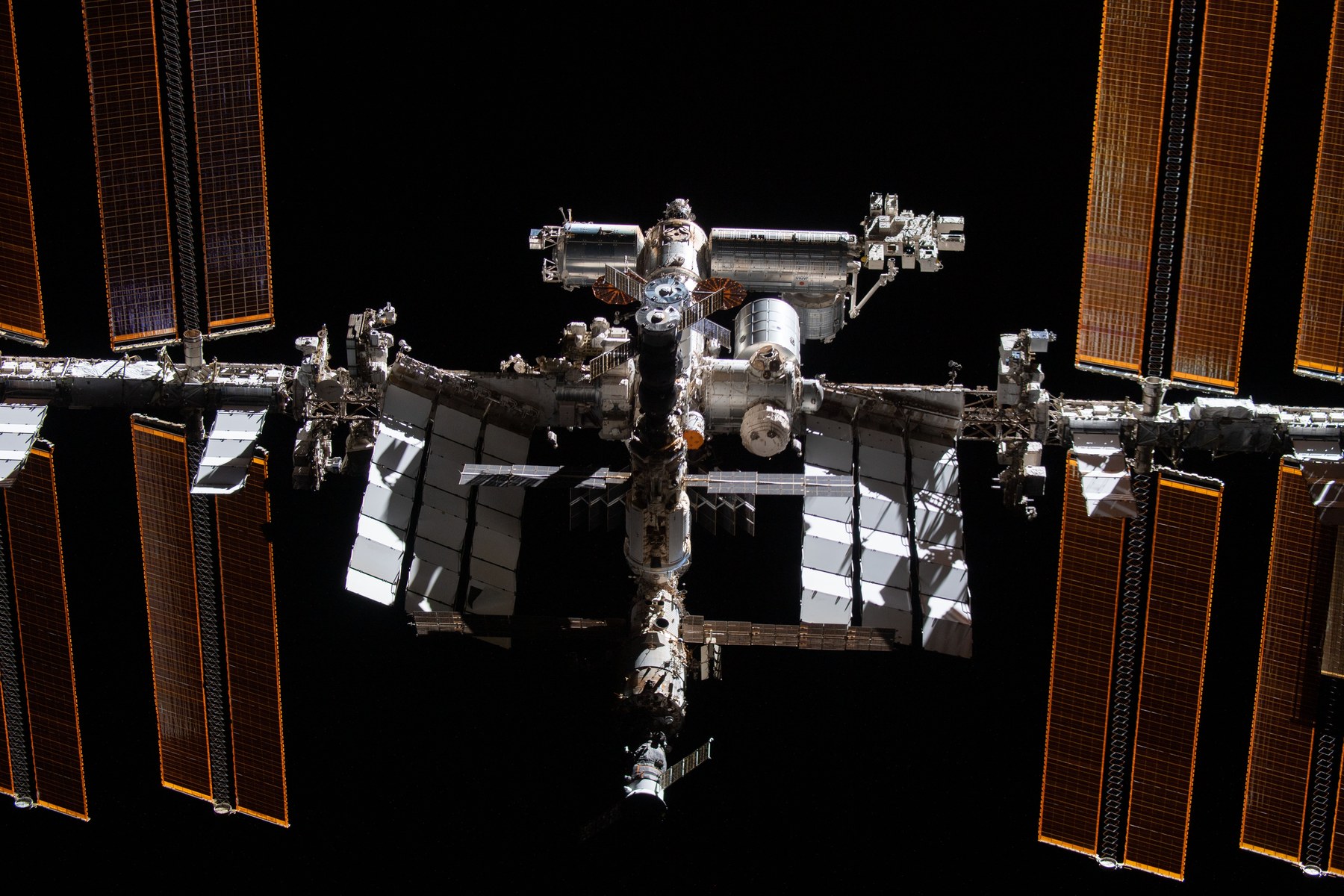
The ISS is the only place where States have agreed criminal jurisdiction rules in advance. The Intergovernmental Agreement on the Civil International Space Station (IGA) was signed in Washington on 29 January 1998 by Canada, the governments of European Space Agency member States, Japan, Russia and the United States. Canada publishes the full text as a schedule to its implementing Act.
Article 5 applies Article VIII to the station’s modules. Each partner registers the flight elements it provides and keeps jurisdiction and control over them “and over personnel in or on the Space Station who are its nationals”. The station is not one legal territory but a set of linked modules, each tied to its registering partner.
Article 22 then sets the criminal rules, “in view of the unique and unprecedented nature of this particular international cooperation in space”. It works in three steps.
First, nationality. Canada, the European Partner States, Japan, Russia and the United States “may exercise criminal jurisdiction over personnel in or on any flight element who are their respective nationals”. An American astronaut in the Japanese module is still within US criminal jurisdiction.
Second, the victim’s State can step in. Where misconduct on orbit affects the life or safety of another partner’s national, or happens in or damages another partner’s flight element, the offender’s State must consult the affected State if asked. The affected State may then prosecute, provided that within 90 days of the consultation the offender’s State either agrees or fails to give assurances that it will submit the case to its own prosecutors.
Third, cooperation. A partner that needs a treaty to extradite may treat the IGA as that treaty for misconduct on orbit, and each partner must give the others assistance, subject to its own laws.
The design keeps prosecution with the crew member’s own State unless that State agrees to hand the case over or will not commit to prosecuting it.
How national law reaches orbit
Article 22 allows prosecution, but each State still needs domestic law that covers the conduct.
In the United States, federal criminal law applies within the “special maritime and territorial jurisdiction of the United States”. Under 18 U.S.C. section 7(6), that includes “any vehicle used or designed for flight or navigation in space” that is on the US registry, “while that vehicle is in flight”. The statute defines “in flight” as running from the moment the external doors close on Earth until a door opens on Earth. That fits a crew vehicle neatly, but a station module launched without crew that never comes back much less so.
Canada legislated more precisely. Section 7(2.3) of the Criminal Code deems an indictable offence committed by a Canadian crew member “on, or in relation to, a flight element of the Space Station” or on transport to or from it to have been committed in Canada. Section 7(2.31) does the same for a crew member of another partner State whose act threatens the life or security of a Canadian crew member or damages a Canadian flight element. Under section 7(2.33), no prosecution can begin without the consent of the Attorney General of Canada.
Keeping order on board
Most problems in orbit will never reach a prosecutor. Article 11 of the IGA requires a Crew Code of Conduct, which NASA has published as 14 CFR 1214.403. It sets up a chain of command, gives the ISS Commander authority to enforce safety, security and crew rescue procedures on behalf of all the partners, and provides for a disciplinary policy. That policy is administrative: a breach can, for example, affect a person’s future flight assignments. The Code states that it does not limit Article 22, and Article 22 states that it does not limit the Code. Discipline and prosecution run in parallel.
On NASA’s own missions the commander’s powers go further. Under 14 CFR 1214.702, the NASA Commander has “absolute authority” during all flight phases to take whatever action is necessary to keep order, protect the crew and protect the spacecraft, “including the use of physical force”. That authority extends to everyone on board, US nationals or not, and the commander may restrain a person “until such time as delivery of such individual or individuals to the proper authorities is possible”.
The case that made the headlines
The 2019 allegation shows how these rules work in practice. The astronaut’s estranged spouse complained to the Federal Trade Commission, and repeated the claim in an interview with NASA’s Office of Inspector General, that the astronaut had accessed her bank account from the ISS. The astronaut’s lawyer said she had only been checking that the family’s finances were in order and had never been told the account was off limits.
In April 2020, as NBC News reported, federal prosecutors announced that a grand jury in Houston had indicted the accuser on two counts of making false statements, each carrying up to five years in prison. The indictment alleged that she had misstated when the bank account was opened and when her login details were changed.
The lesson is that the location of the act was not the hard part. Both people were US nationals, the bank was on Earth, and the matter was handled by NASA’s inspector general and federal prosecutors in Texas. Article 22 never came into play. Most near-term cases will probably look like this: conduct in orbit with effects on the ground, dealt with by courts on the ground.
The gaps
Four gaps open up as the crew list and the destinations widen.
The first is people from outside the partnership. Article 22 speaks only of the partners’ “respective nationals”. Private missions now bring other nationals to the station. Axiom Mission 4 in 2025, for example, flew Shubhanshu Shukla, an astronaut of the Indian Space Research Organisation, as pilot, and India is not an IGA partner. Article VIII still gives each partner jurisdiction over its own modules, but Article 22’s nationality-first rule does not fit such crew. Canada’s Criminal Code partly fills this gap by treating a foreign citizen authorised by Canada to fly as a Canadian crew member, but that is a domestic solution, not a shared one.
The second is private stations. The IGA covers the ISS and nothing else. As NASA plans for the ISS to give way to commercial stations, which we covered in our ISS retirement piece, jurisdiction will fall back on Article VIII and the law of whichever State registers each station. That makes the choice of registry State a practical criminal law question, not just a licensing one. Operators will need clear rules for their commanders and passenger contracts that say whose law applies. Our piece on space tourism and the law sets out how the US treats paying passengers.
The third is the Moon. The Artemis Accords cover transparency, emergency assistance, registration, space resources, deconfliction and debris. They say nothing about criminal jurisdiction. A joint lunar base built by several States would need its own IGA-style agreement, or each module and each crew member would carry their own national law, as on the ISS but without the agreed rules for cross-border cases.
The fourth is enforcement. A prosecution needs evidence, witnesses and the suspect on Earth. In orbit, the crew are the only witnesses, the scene is a working spacecraft, and none of the treaties says how evidence should be preserved.
What I would watch
The first is the agreements behind commercial stations, which will show whether States copy Article 22 or leave jurisdiction to the registry State alone.
The second is national legislation. Canada wrote ISS offences into its Criminal Code. I expect other States that license private stations or send citizens on private missions to face pressure to make the reach of their criminal law in orbit explicit, rather than relying on general provisions written for aircraft and ships.
The third is lunar cooperation. Any multinational lunar surface agreement is the obvious place for criminal jurisdiction rules. Their absence from the Artemis Accords is understandable for a political instrument, but a base with crew from several States will need more.
The fourth is the first real case. It is likely to be ordinary, such as fraud, harassment or damaged equipment, and whichever national court hears it will set the practical precedent for crime in space.
Questions people actually ask
Is there a law against crime in space?
There is no international criminal code for space. Article VIII of the Outer Space Treaty gives the State that registers a spacecraft jurisdiction and control over it and its personnel, so that State’s own criminal law can apply. For the ISS, Article 22 of the 1998 Intergovernmental Agreement adds specific rules on which partner can prosecute.
Who has jurisdiction over a crime on the International Space Station?
Under Article 22 of the Intergovernmental Agreement, each partner (Canada, the European Partner States, Japan, Russia and the United States) may prosecute its own nationals. If the misconduct endangers another partner’s national or damages another partner’s module, that partner may prosecute after consultation if, within 90 days, the offender’s State agrees or fails to give assurances that it will submit the case for prosecution.
Has anyone been charged with a crime committed in space?
I am not aware of any prosecution for conduct in space. In 2019 a NASA astronaut was accused of accessing her estranged spouse’s bank account from the ISS, but she was not charged. In April 2020 a federal grand jury in Houston indicted the accuser on two counts of making false statements to federal authorities.
Does US criminal law apply in space?
In part. Under 18 U.S.C. section 7(6), US federal criminal jurisdiction covers space vehicles on the US registry while they are in flight, defined as from the moment the doors close on Earth to the moment a door opens on Earth. US nationals on the ISS are also within US jurisdiction under Article 22 of the Intergovernmental Agreement.
What authority does a spacecraft commander have?
On NASA missions, 14 CFR 1214.702 gives the NASA Commander absolute authority during flight to keep order and protect crew and spacecraft, including the use of physical force and restraint until the person can be handed to the proper authorities. On the ISS, the Crew Code of Conduct gives the ISS Commander authority to enforce safety and security procedures on behalf of all partners.
What law will apply on private space stations?
The ISS Intergovernmental Agreement does not cover private stations. Under Article VIII of the Outer Space Treaty, the State that registers each station will have jurisdiction, and its criminal law, with the operator’s own rules and contracts, will govern conduct on board.

Anuj KumarEditor-in-Chief
Anuj Kumar is the founder of Legal Desire Media and publishes Fashion Law Journal and Space Law Journal.
Space Law Journal is a joint initiative of Legal Desire Media and Odyogeek. Spotted something we got wrong, or want to respond? Write to space@legaldesire.com.