Is Advertising in Space Legal? The US Ban on Obtrusive Space Advertising Explained
Is advertising in space legal? How the US ban on obtrusive space advertising works, what it allows, who it covers and why no treaty bans orbital billboards.
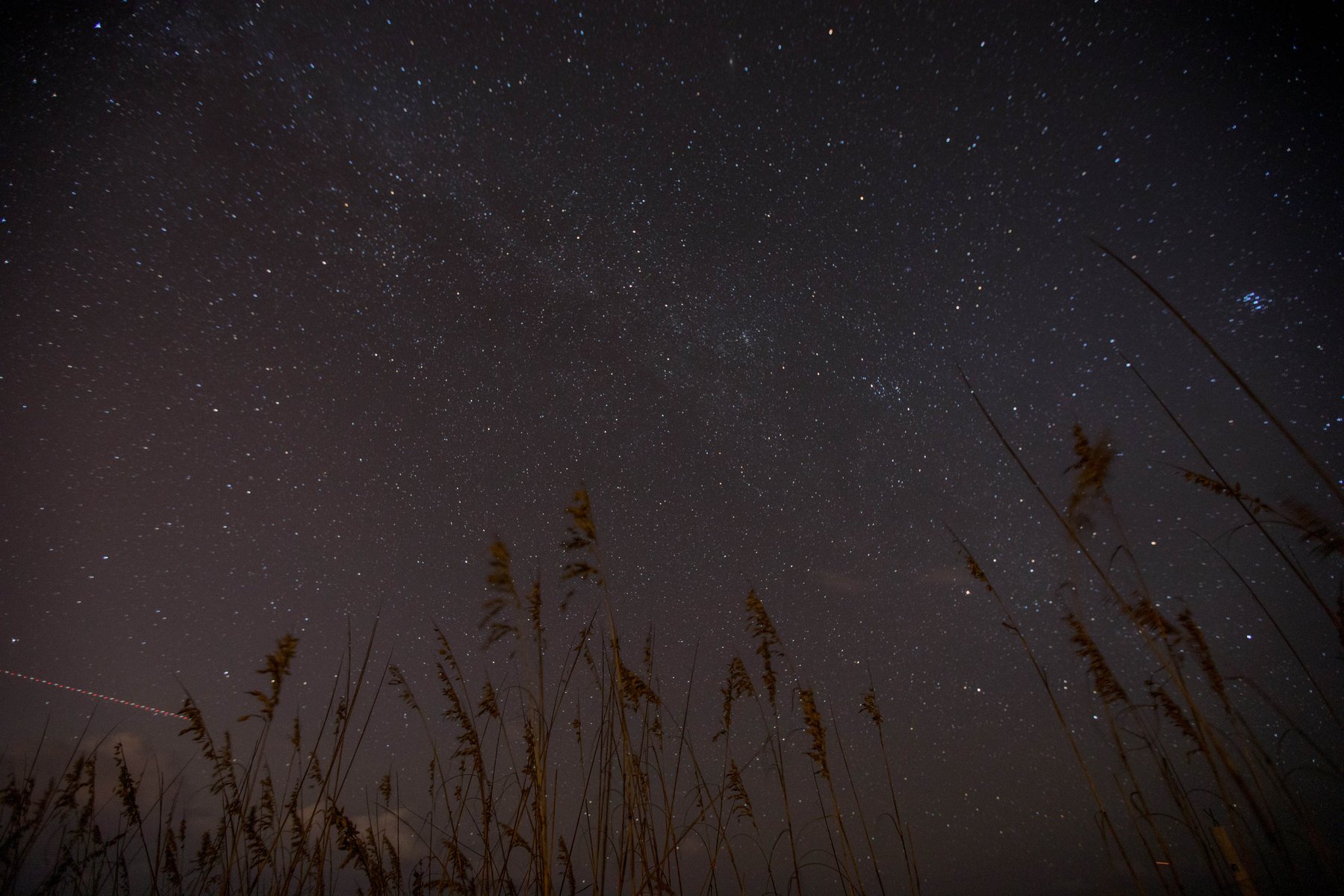
The photograph above is the night sky over the Atlantic shoreline at Kennedy Space Center on 31 October 2019, with the Milky Way running across it and an aircraft’s lights leaving a streak at lower left. That view, from the ground and with the naked eye, is exactly what US space advertising law protects.
The question comes up every few years, usually when a start-up promises a logo in the night sky. The short answer: you can advertise in space, but you cannot use a US-licensed rocket to put up something people on Earth will see as an advert. This explainer sets out the rule, its origins, what it allows and where it stops.
Is advertising in space legal?
The rule is in 51 U.S.C. 50911, headed “Space advertising”. It has three parts.
Subsection (a) says the Secretary of Transportation “may not, for the launch of a payload containing any material to be used for the purposes of obtrusive space advertising”, either “issue or transfer a license” or “waive the license requirements”. The Secretary’s licensing power sits with the FAA’s Office of Commercial Space Transportation.
Subsection (b) binds the companies directly: “No holder of a license under this chapter may launch a payload containing any material to be used for purposes of obtrusive space advertising.”
Subsection (c) is the carve-out. Nothing in the section applies to “nonobtrusive commercial space advertising”, including advertising on commercial space transportation vehicles, space infrastructure payloads, space launch facilities and launch support facilities.
So the law does not ban advertising in space. It bans one kind, the kind you can see from the ground.
What counts as obtrusive space advertising?
The definition is in 51 U.S.C. 50902(12): “advertising in outer space that is capable of being recognized by a human being on the surface of the Earth without the aid of a telescope or other technological device.”
Three features of that test matter.
First, the test is recognition, not visibility. A satellite that shows up as a moving point of light is visible, but nobody can recognise a brand in it. A formation of reflectors arranged to spell a name, or a sail shaped as a logo, is what the definition is aimed at.
Second, the test is the naked eye. Advertising that can only be read through a telescope or binoculars falls outside it.
Third, it is a payload test. The ban applies to a payload “containing any material to be used” for that purpose. A brand painted on the side of the rocket is not a payload being used for obtrusive advertising, and subsection (c) protects it in any case.
Where the ban came from
The trigger was a 1993 proposal by Space Marketing Inc., a Georgia company run by Mike Lawson, to put a mile-long mylar sheet into orbit about 180 miles up, big enough to create a moon-sized image, according to Popular Science’s account. The backlash was immediate. Carl Sagan called the idea “an abomination”, and advertisers backed away within a year.
Congress moved quickly. On 1 July 1993, Representative Ed Markey introduced H.R. 2599, the Space Advertising Prohibition Act, which would have declared that “the use of outer space for advertising purposes is not an appropriate use of outer space and should be prohibited.” That bill did not become law, but the narrower ban did, seven years later. Section 50911 was added by Public Law 106-391, enacted on 30 October 2000, and the same law asked the President “to negotiate with foreign launching nations for the purpose of reaching one or more agreements that prohibit the use of outer space for obtrusive space advertising purposes.”
The difference between the two texts is the point. The 1993 bill would have banned all advertising in space. The 2000 law banned only what people on the ground would see, and expressly allowed the rest.
Who does the ban apply to?
Because the rule works through FAA licensing, it reaches exactly the activities that need an FAA licence. Under 51 U.S.C. 50904(a), that means any launch in the United States, and launches anywhere by US citizens, including US companies.
It does not reach a foreign company launching on a foreign rocket from foreign territory. The 2019 StartRocket episode showed the gap. The Russian start-up proposed a formation of small satellites with reflective sails to display logos in the night sky, and PepsiCo’s Russian subsidiary said it had agreed to partner on an orbital campaign. As SpaceNews reported, the US statute would only have mattered if StartRocket used a US launch. PepsiCo’s US headquarters then said the test had been a “one-time event” and that it had “no further plans to test or commercially use this technology at this time.”
In practice, the FAA would meet an obtrusive advertising payload during the payload review that forms part of every licence. Section 50911 means there is nothing to weigh: the FAA cannot license the launch.
One drafting point. Section 50911 refers to licences and to waivers of the licence requirement. It does not mention experimental permits, which cover reusable suborbital rockets under a separate section. I have not found any guidance on whether the ban was meant to reach them, and in practice it is hard to see a suborbital test flight carrying an orbital billboard.
Newsletter
Get Space Law Insider every Monday
One short email a week with the space law news and analysis worth your time. Free, and you can leave any time.
What is allowed: logos, pizza and skincare
Non-obtrusive advertising has a long history. In July 2000, Pizza Hut’s logo flew on the Proton rocket that launched the Zvezda service module to the International Space Station. The Christian Science Monitor reported that the logo was 30 feet high and that Pizza Hut reportedly paid about USD 1 million. That was a Russian launch, but the same deal on a US rocket would sit squarely within subsection (c).
The International Space Station is now open to marketing on commercial terms. On 7 June 2019, NASA announced a policy allowing the station to be used for for-profit activities, “including manufacturing, tourism, and marketing”, as the Office of Space Commerce summarised it. NASA’s current commercial and marketing pricing policy says all commercial and marketing activities using station resources “shall require a reimbursable space act agreement (RSAA) or another arrangement with NASA to recover costs.” Our explainer on Space Act agreements covers that instrument.
The best known example is Estée Lauder. In 2020 the company sent ten bottles of its Advanced Night Repair serum to the station on Northrop Grumman’s NG-14 Cygnus to be photographed in front of the cupola windows. collectSPACE reported that the company paid USD 17,500 an hour for crew time under the 2019 price list, that no astronauts would appear with the product because of restrictions on civil servants, and that Estée Lauder could not use the images to imply NASA or astronaut endorsement. NASA has since raised its prices to reflect full reimbursement.
None of this was visible from the ground, so the ban never came into it.
What about international law?
No treaty bans advertising in space. The Outer Space Treaty says nothing about it directly. The relevant hooks are in Article IX, which requires states to act “with due regard to the corresponding interests of all other States Parties” and to undertake “appropriate international consultations” before an activity that “would cause potentially harmful interference with activities of other States Parties in the peaceful exploration and use of outer space.”
Astronomy is a peaceful use of outer space, and a bright orbital billboard would interfere with it. Whether that triggers a duty to consult is arguable, and the duty falls on the state, not the company. Article VI makes states responsible for their nationals’ activities, so in practice the question is whether the home state’s licensing rules catch the payload. Our explainer on the Outer Space Treaty covers both articles.
Congress’s 2000 request for agreements with other launching nations has not, as far as I can find, produced any.
Where the definition gets tested
The live issue is not billboards. It is satellites that are bright for other reasons. Large constellations and orbital reflectors are visible to the naked eye, but they are not advertising, so section 50911 does not apply. The arguments over them run through spectrum licensing and environmental review instead, as in the challenge discussed in our case note on Dark Sky Association v FCC and the debate over Reflect Orbital’s space mirror.
A reflector that can be steered to light up a chosen area could, in principle, be shaped or arranged to show a brand. At that point the statute would apply, and the FAA could not license the launch.
What I would watch
The first is reflectors. If a company proposes using an orbital mirror to project a recognisable mark, section 50911 will be tested for the first time in years, and the “capable of being recognized” wording will matter.
The second is the FAA’s planned overhaul of its commercial space framework in 2027. Section 50911 is statutory, so the FAA cannot remove it, but any change to how payload reviews are done will affect how the question is spotted.
The third is commercial stations. As NASA hands low Earth orbit to private stations, branded modules, sponsored missions and marketing content will grow. All of that is allowed under subsection (c). The only question is whether anything ends up visible from the ground.
Questions people actually ask
Is advertising in space legal?
Yes, with one major limit in US law. Logos on rockets, spacecraft and launch facilities, and marketing on the International Space Station under NASA’s policy, are allowed. What the US prohibits is obtrusive space advertising: advertising in outer space that a person on the ground can recognise without a telescope or other device.
What law bans billboards in space?
51 U.S.C. 50911, added by Public Law 106-391 on 30 October 2000. It bars the FAA from issuing, transferring or waiving a licence for the launch of a payload containing material to be used for obtrusive space advertising, and bars licensees from launching such a payload.
What does obtrusive space advertising mean?
Under 51 U.S.C. 50902(12) it means advertising in outer space that is capable of being recognised by a human being on the surface of the Earth without the aid of a telescope or other technological device.
Can a foreign company put an advert in orbit?
The US ban only applies to launches that need an FAA licence, which covers launches from the United States and launches by US citizens and companies abroad. A foreign company using a foreign rocket from foreign territory is outside it, and no international treaty prohibits orbital advertising.
Can companies advertise on the International Space Station?
Yes. Since June 2019 NASA has allowed commercial and marketing activities on the station, subject to a reimbursable Space Act agreement or similar arrangement and NASA’s price list. In 2020 Estée Lauder paid for crew time to photograph its serum in the cupola, without astronauts appearing in the images.
Has anyone ever proposed an orbital billboard?
Yes. In 1993 Space Marketing Inc. proposed a mile-long mylar billboard in orbit, which led to the first congressional bill to ban space advertising. In 2019 the Russian start-up StartRocket proposed reflective satellites to display logos, and PepsiCo’s US headquarters later said it had no further plans to use the technology.
Space Law Insider
Read the week in space law in five minutes
Every Monday we send one email with the new regulations, filings, cases and explainers published on Space Law Journal. Join practitioners, students and policy people who read it.

Anuj KumarEditor-in-Chief
Anuj Kumar is the founder of Legal Desire Media and publishes Fashion Law Journal and Space Law Journal.
Space Law Journal is a joint initiative of Legal Desire Media and Odyogeek. Spotted something we got wrong, or want to respond? Write to space@legaldesire.com.