FAA Payload Review Explained: What the FAA Checks Before a Satellite Can Fly
What is an FAA payload review? What the FAA checks before a payload flies, which agencies it consults, what applicants must file and where the review stops.
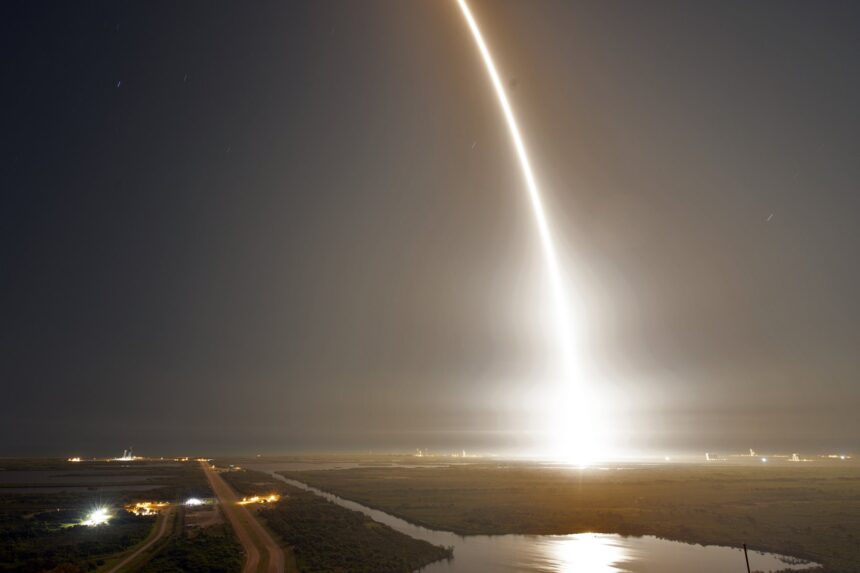
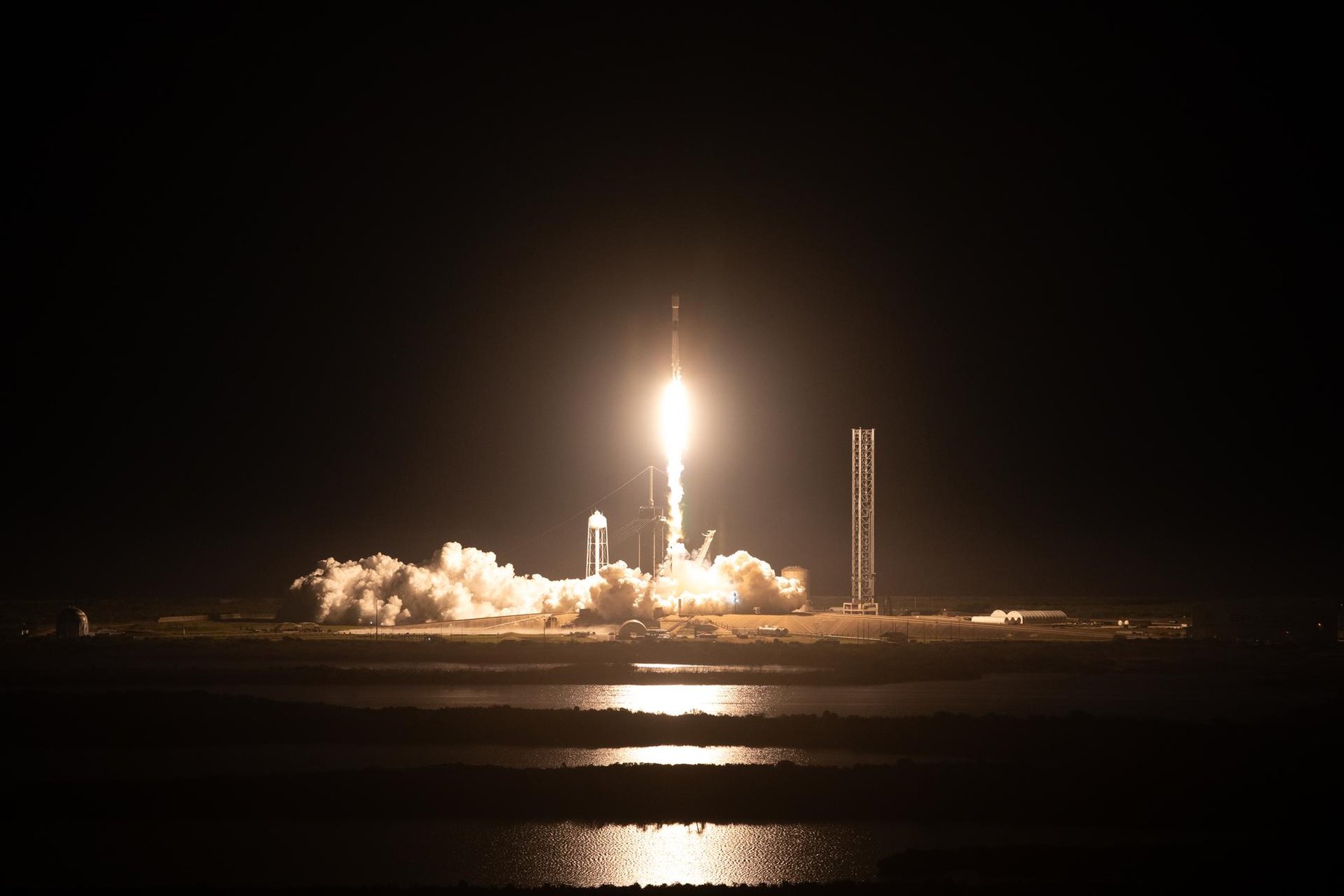
The rocket in the photograph is a SpaceX Falcon 9 lifting off from Launch Pad 39A at Kennedy Space Center at 1:05 a.m. EST on 15 February 2024, carrying Intuitive Machines’ Nova-C lunar lander. The rocket needed an FAA launch licence. The lander was a payload, which brings it within a separate and less well known part of the FAA’s job: the payload review.
Payload review comes up whenever someone asks who in the US government approves what a spacecraft actually does. This explainer covers what the FAA checks, what it leaves to other agencies, who it consults, what an applicant must file, and where the review runs out.
What is an FAA payload review?
The statutory basis is 51 U.S.C. 50904. Subsection (b) says a licensee “may launch or reenter a payload only if the payload complies with all requirements of the laws of the United States related to launching or reentering a payload.” Subsection (c) tells the Secretary of Transportation to “establish whether all required licenses, authorizations, and permits required for a payload have been obtained.” If no licence is required, the Secretary “may prevent the launch or reentry” if it “would jeopardize the public health and safety, safety of property, or national security or foreign policy interest of the United States.”
A payload is defined in 14 CFR 401.7 as “an object that a person undertakes to place in outer space by means of a launch vehicle, including components of the vehicle specifically designed or adapted for that object.” Satellites, landers, cargo, capsules and hosted payloads all qualify.
The FAA’s rule is 14 CFR 450.43. The FAA issues a favourable payload determination if two conditions are met: the applicant, payload owner or operator “has obtained all required licenses, authorizations, and permits”, and the launch or reentry “would not jeopardize public health and safety, safety of property, U.S. national security or foreign policy interests, or international obligations of the United States.” The regulation adds international obligations to the statutory list, which matters for missions that raise Outer Space Treaty questions.
A favourable payload determination is one of the components of a vehicle operator licence under section 450.31, alongside policy approval, safety approval and environmental review. Our explainer on FAA Part 450 covers the licence as a whole.
What does the FAA not review?
Two categories are carved out by section 450.43(b). The FAA does not make the public safety and national interest determination for “those aspects of payloads that are subject to regulation by the Federal Communications Commission or the Department of Commerce”, or for “payloads owned or operated by the U.S. Government.”
In practice that means a commercial communications satellite’s radio operations belong to the FCC, and a commercial imaging satellite’s remote sensing belongs to NOAA. The FAA checks that those licences exist, which is the first limb of the test, but it does not reopen them. A NASA science spacecraft on a commercial rocket is outside the determination altogether, although the launch itself is still licensed.
The FAA says it still looks at every payload for its effect on launch safety. Its 2024 notice on reentry vehicles states that “the FAA would review all payloads to determine their effect on the safety of launch,” even where section 450.43(b) takes the policy determination away.
The rule also allows the FAA to “review and issue findings regarding a proposed class of payload, including communications, remote sensing, or navigation.” Even then, each individual payload remains “subject to verification” before launch.
Who does the FAA consult?
Section 450.43(e) requires consultation with the Department of Defense on national security, the Department of State on foreign policy and international obligations, and other agencies, including NASA, with relevant authority. The FAA’s Advisory Circular 450.31-1 lists the usual partners and their roles:
| Agency | Primary area in a payload review |
|---|---|
| Department of Defense | US national security |
| Department of State | Foreign policy and international obligations |
| NASA | Effect of commercial activities on NASA interests |
| NOAA (Commerce) | Commercially owned remote sensing satellites |
| FCC | Commercial communications satellites and frequency licensing |
| Office of the Director of National Intelligence | US national security |
| Department of Energy, NNSA and NRC | Payloads with nuclear materials |
| US Coast Guard | Overflight of navigable waterways |
The circular is clear about where authority sits: “Although the FAA consults with Federal agencies, the authority to issue a favorable determination or a denial of a payload or policy review resides with the Secretary of Transportation.” It also flags the issues that have come up before, including foreign ownership and the transfer of sensitive technology.
What must an applicant file?
Section 450.43(i) sets out the information. For a launch, it includes the payload’s name and function; its dimensions, weight, composition and any hosted payloads; the owner and operator; any foreign ownership; hazardous and radioactive materials and their amounts; explosive potential; parking, transfer and final orbits; the point where the payload leaves the launch operator’s control; intended operations, life span and planned disposal; and “any encryption associated with data storage on the payload and transmissions to or from the payload.” For a reentry, the list adds the container of any hazardous materials and the designated reentry site.
In March 2024 the FAA tightened its reading of those requirements. Its policy on disclosure of payload contents requires applicants to “provide a complete manifest of all payload contents and compositions, including those of all hosted payloads,” citing “the increasing complexity of payloads on the growing volume of FAA-licensed launches or reentries.” For rideshare missions and memorial or novelty payloads, of the kind discussed in our piece on space burials, that means the contents of every container, not just a label.
How does the process work?
A payload review is usually part of the launch operator’s licence application. It does not have to be. Under section 450.43(d), “a payload owner or payload operator may request a payload review and determination,” and the FAA’s payload review page confirms this can happen “in advance of and separately from a launch or reentry authorization.”
If a problem arises, the FAA must say so in writing, and the applicant may respond or amend its application. A denial must state reasons, and the applicant can seek further review under the Part 413 procedures. A favourable determination can be included in a later licence application, but any change to the information supplied must be reported, and the FAA may decide the determination no longer holds.
For a small satellite team, the practical effect is that the launch provider will ask for the FCC grant and any other licences before integration. Our guide on licensing a CubeSat walks through that sequence.
Moon landers, reentry capsules and the edge of the review
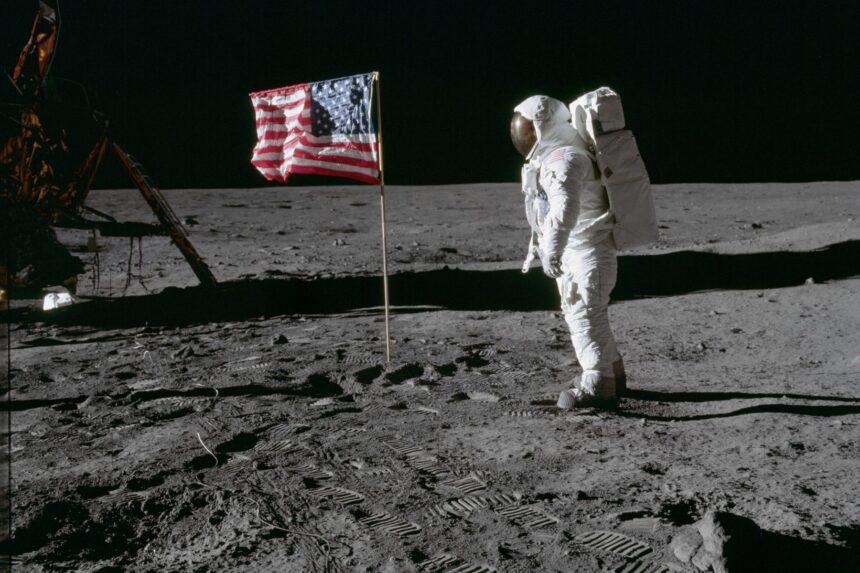
Because payload review asks whether a mission would affect US international obligations, it has been used for activities no other agency licenses. The best known example is Moon Express. In 2016 the company used “the FAA’s existing authority to conduct payload reviews as part of its launch licensing process” and made voluntary disclosures to other agencies, including the State Department, according to SpacePolicyOnline’s report at the time. The company’s chief executive, Bob Richards, said the FAA approved its MX-1 lander in a letter dated 20 July 2016, and that the favourable determination applied only to that launch and set no precedent.
Lunar and deep space missions also bring in planetary protection. The advisory circular says the State Department reviews proposed missions for conformity with agreements such as the Outer Space Treaty, often with a technical assessment by NASA, and that operators should use “reasonable efforts” to follow COSPAR guidelines. For lunar surface missions, it asks for an inventory of propulsion products released into the lunar environment. Our explainer on planetary protection covers the underlying rules.
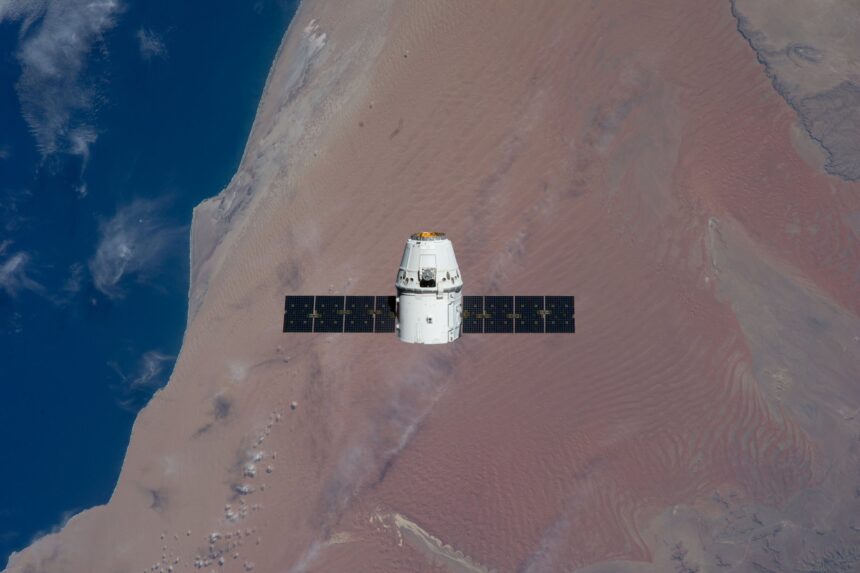
Reentry vehicles are the other edge case. In an April 2024 notice, the FAA said a payload review for a rocket carrying a reentry vehicle “would include verifying that the reentry vehicle operator has obtained the necessary reentry license or authorization,” and that it generally will not authorise the launch otherwise.
The limits are real. Payload review is a gate at launch, not continuing supervision in orbit. Nothing in section 450.43 gives the FAA a continuing role in what a payload does after it has been delivered. Our analysis of who regulates space in the US sets out why that leaves a gap in the “authorization and continuing supervision” that Article VI of the Outer Space Treaty requires for novel activities.
What I would watch
The first is the FAA’s planned overhaul of its commercial space framework in 2027. Payload review is one of the few tools that reaches non-radio, non-imaging payloads, so any change to section 450.43 will shift what is left unregulated.
The second is the Commerce Department’s voluntary certification pilot. If it matures into something formal, payload reviews for in-space servicing, manufacturing or similar missions could start to rely on a Commerce certificate rather than on case-by-case interagency consultation.
The third is volume. With more licensed launches and larger rideshare manifests, expect more use of payload class determinations and more questions about how quickly agencies respond during consultation.
Questions people actually ask
What is an FAA payload review?
It is the FAA’s check, under 14 CFR 450.43 and 51 U.S.C. 50904, that a payload on a licensed launch or reentry has all required licences, authorisations and permits, and that its launch or reentry would not jeopardise public health and safety, safety of property, US national security or foreign policy interests, or US international obligations.
Does every satellite need an FAA payload determination?
A payload on an FAA-licensed launch or reentry is reviewed, but the FAA does not make the public interest determination for aspects regulated by the FCC or the Department of Commerce, or for payloads owned or operated by the US government. For those, it confirms that the other licences exist and looks at launch safety.
Who can ask the FAA for a payload review?
The launch or reentry operator usually requests it as part of its licence application. Under 14 CFR 450.43(d), a payload owner or payload operator may also request a review and determination, and the FAA says this can be done in advance of and separately from a launch or reentry authorisation.
Which agencies does the FAA consult during a payload review?
The FAA consults the Department of Defense on national security and the Department of State on foreign policy and international obligations, and often NASA, NOAA, the FCC, the Office of the Director of National Intelligence and, for nuclear materials, the Department of Energy, NNSA and NRC. The final decision rests with the Secretary of Transportation.
Do payload contents have to be disclosed to the FAA?
Yes. Under a policy published on 14 March 2024, applicants for a payload determination must provide a complete manifest of all payload contents and compositions, including those of hosted payloads. The regulation also requires details of hazardous and radioactive materials, explosive potential, orbits, intended operations and encryption.
Can the FAA approve a private Moon mission through payload review?
It has done so in at least one well-known case. In 2016 Moon Express said it had obtained a favourable payload determination for its MX-1 lunar lander, in an FAA letter dated 20 July 2016, after interagency consultation and voluntary disclosures. The company said the determination covered only that launch and set no precedent.

Anuj KumarEditor-in-Chief
Anuj Kumar is the founder of Legal Desire Media and publishes Fashion Law Journal and Space Law Journal.
Space Law Journal is a joint initiative of Legal Desire Media and Odyogeek. Spotted something we got wrong, or want to respond? Write to space@legaldesire.com.