
FAA Flight Abort Proposals: Part 450 Changes to Abort Limits and Random Reentry
The FAA flight abort proposals of 9 November 2026 rework Part 450 abort limits and add a random reentry breakup route. Comments close on 9 December.
The FAA flight abort proposals published in this morning’s Federal Register are small in text and large in consequence. Each changes a sentence or two of 14 CFR Part 450, but two go to how the FAA decides whether a rocket in flight may keep flying, and the third changes how operators prove that a spacecraft falling out of orbit on its own will not kill several people at once.
The Department of Transportation announced the package on 5 November 2026. This note explains what each proposal does and the questions I think commenters should press before 9 December.
What was published on 9 November
Four documents appeared, all from the Office of Commercial Space Transportation:
The end of flight safety limits proposal (91 FR 70817, docket FAA-2026-9943), amending section 450.108(e).
The flight safety limits objectives proposal (91 FR 70821, docket FAA-2026-9937), amending section 450.108(c)(4).
The conditional expected casualty exception for uncontrolled atmospheric returns (91 FR 70813, docket FAA-2026-9942), amending section 450.101(c) and adding a definition to section 401.7.
A final rule of technical corrections (91 FR 70785, docket FAA-2026-7035), effective 9 November 2026.
Each is issued under Executive Order 14335 of 13 August 2025, which told the Secretary of Transportation to “reevaluate, amend, or rescind” Part 450. They are separate from the five proposals of 5 October covered in our note on the October Part 450 package, which dealt with filing repetition, physical containment, lightning, blast analysis wording and the online portal.
Some vocabulary first
Part 450 protects the public in two layers. The first is a set of risk criteria in section 450.101(a) and (b). For a launch, collective risk to the public must not exceed 1 x 10⁻⁴ expected casualties, and the risk to any individual member of the public must not exceed a probability of casualty of 1 in a million per launch, as the current rule sets out.
The second layer is “high consequence event protection” in section 450.101(c). Averages can hide a low probability, high harm outcome, so the FAA also asks operators to protect against events that could cause multiple casualties. An operator has three routes: use flight abort under section 450.108, show that the conditional expected casualties (CEC) of any reasonably foreseeable failure mode in any significant period of flight are no greater than 1 x 10⁻³, or show sufficient demonstrated reliability.
CEC is the number of casualties expected if a given failure happens, ignoring how likely the failure is. It asks how bad the outcome would be, not how often.
Flight abort: off for a phase, not for the rest of flight
Section 450.108(e), headed “End of flight abort”, currently says a flight need not be aborted to protect against high consequence events “for the remainder of flight” once critical vehicle parameters are validated, provided the vehicle can achieve a useful mission, flight abort would not materially reduce the risk, and there are no key flight safety events left.
The FAA explains that the paragraph was written on the assumption that operators would only disable flight abort near the end of a flight, such as the phase just before orbital insertion. It now “anticipates that operators may seek to turn off flight abort capability during one phase of flight and turn it back on during a subsequent phase.” The proposal would apply the exception to “the remainder of a phase of flight” and would retitle the paragraph “End of flight safety limits”.
The FAA says the current heading wrongly suggests that operators must switch off the flight safety system; the paragraph only describes when they need not set flight safety limits against high consequence events. The DOT release puts the result simply: it “allows operators to toggle abort capability during flight.”
The FAA’s cost analysis is light: no new costs, some time saved on guidance, and a request for comments on that assumption.
Flight safety limits: one averaged number, not two
Flight safety limits are the lines that, if crossed, oblige the operator to abort. Section 450.108(c)(4) requires those limits to prevent CEC greater than 1 x 10⁻² in uncontrolled areas “due to flight abort or due to flight outside the limits of a useful mission” from any reasonably foreseeable off-trajectory failure mode in any significant period of flight. The current wording is in section 450.108.
According to the FAA, applicants have read this in two incompatible ways. Some ran two separate CEC calculations, one for abort outcomes and one for flight outside the useful mission limits. Others picked one of the two outcomes and ignored the other. The FAA’s advisory circular already said the results should be “averaged together”, but the agency says misreadings “have persisted and led to repeated exchanges with the applicants.”
The proposed text says the limits must prevent CEC in uncontrolled areas “averaged over outcomes that result in either flight abort or flight outside the limits of a useful mission” greater than 1 x 10⁻². Breakups within the useful mission limits stay out of the calculation. The FAA puts the saving at $1,347 per operator and $53,880 undiscounted over five years, based on 40 new licence applications expected in that period.
This is a clarification, but averaging is not neutral: a benign and a severe outcome can average below a threshold the severe case alone would breach. Commenters should ask how the averaging is weighted and how that is documented in an application.
Random reentry: the breakup route
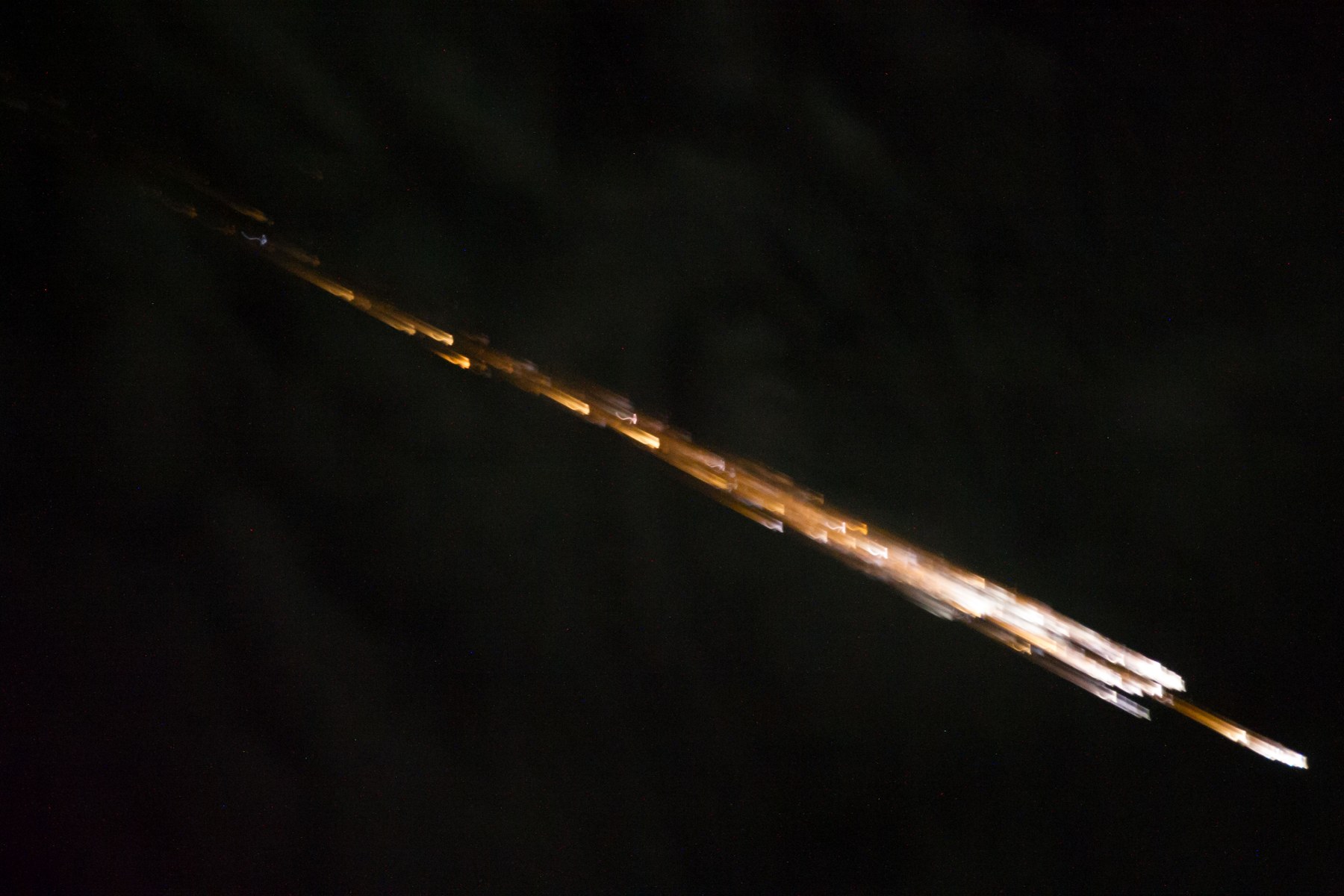
The third proposal is the one I would read first. It adds a definition to section 401.7: an “uncontrolled atmospheric return” is “the passive descent of a launch or reentry vehicle from orbit that occurs as a result of natural orbital decay and where there is no ability to control the vehicle’s trajectory.” It then adds a new option in section 450.101(c)(2)(ii): instead of showing CEC no greater than 1 x 10⁻³, an operator may show that the failure mode “results in sufficient breakup of the launch or reentry vehicle, including all vehicle components and undeployed payloads, during an uncontrolled atmospheric return.”
The FAA’s reasoning is that flight abort cannot apply to an uncontrolled object and no vehicle is close to the demonstrated reliability the third route needs, which leaves a labour intensive CEC calculation. Random reentry footprints are huge, debris most likely falls where few people live, and surviving fragments scatter widely, so the agency argues that several people are unlikely to be hurt by the same event if the collective risk criteria are met.
The definition is narrow. Propulsion that lowers perigee below 70 nautical miles is not natural decay, and steering by orientation is control, so neither counts. The showing would use data already required by the debris and consequence analyses in sections 450.121 and 450.135(b). The FAA estimates savings of $9,674 per application across industry and the agency.
Two things are worth stating plainly. First, the collective risk criteria in section 450.101(a) and (b) still apply; this is an alternative route for the high consequence layer only. Second, “sufficient breakup” is not quantified in the rule text. The preamble says each piece of resulting debris must have “a small enough effective casualty area to make multiple casualties an unlikely outcome”, but how small is left to guidance. The people most affected by random reentry are those under the ground track, and their remedies are thin, as our piece on what happens if space junk hits your house shows. A clear number in the rule would serve them better than one in an advisory circular.
The technical corrections that took effect today
The final rule makes six corrections and updates authority citations. Among them, “flight of a launch vehicle” becomes “deorbit of a reentry vehicle” in section 450.101(b)(2), a stale cross-reference in section 414.43(c) is fixed, and the outdated “accidents and human space flight incidents” in section 460.45(e) is replaced with a cross-reference to the mishap definition in section 401.7.
The FAA used the good cause exception in 5 U.S.C. 553(b)(B) to skip notice and comment. The section 460.45(e) change is the one to check, because it alters what operators must tell spaceflight participants about a vehicle’s safety record. Anyone running an informed consent programme should compare their disclosure template with the new wording.
How this fits the wider programme
The rest of the DOT announcement is larger: “a comprehensive overhaul of its licensing framework in 2027”, a recruitment drive for an Associate Administrator and “a new team of aerospace engineers” with applications due by 4 December, and a request for ideas on new spaceports and “priority airspace” for launch routes. Administrator Bryan Bedford said: “We are clearing the regulatory runway for an unprecedented golden age of commercial spaceflight.” The release projects 10,000 FAA licensed launches and reentries a year by 2035. Read alongside our explainer on how Part 450 launch licensing works, these proposals look like the FAA writing down practices it has been negotiating case by case.
What I would watch
The first is whether the FAA quantifies “sufficient breakup”. If the final rule or a revised advisory circular sets a maximum effective casualty area per fragment, the random reentry route becomes predictable. If it does not, it becomes another item for case by case negotiation, which is the opposite of what the executive order asked for.
The second is the interaction with debris policy at the FCC and abroad. A US rule that makes uncontrolled return easier to license sits awkwardly with regimes that treat it as the exception. France’s technical regulation, for example, expects launcher elements placed in orbit to make a controlled reentry and allows an uncontrolled one only in justified exceptional cases. In my view, operators flying for European customers should not assume the US route will satisfy every regulator involved.
The third is timing. With eight Part 450 proposals now open or recently closed and a full overhaul promised for 2027, the question is whether the FAA finalises these piecemeal or folds them into the larger rewrite.
Questions people actually ask
What did the FAA propose on 9 November 2026?
Three Part 450 amendments: disabling flight abort for one phase rather than the rest of flight, one averaged conditional expected casualty figure for flight safety limits, and a breakup based route for high consequence event protection during an uncontrolled atmospheric return.
When is the comment deadline for the FAA's new Part 450 proposals?
Comments on all three proposals must be submitted by 9 December 2026 through regulations.gov, using dockets FAA-2026-9943 (end of flight safety limits), FAA-2026-9937 (flight safety limits objectives) and FAA-2026-9942 (uncontrolled atmospheric return).
What is an uncontrolled atmospheric return under the proposed rule?
The proposed definition is “the passive descent of a launch or reentry vehicle from orbit that occurs as a result of natural orbital decay and where there is no ability to control the vehicle’s trajectory.” Descents driven by propulsion or steered by orientation would not qualify.
Does the random reentry proposal remove the FAA's public risk limits?
No. The collective and individual risk criteria in section 450.101(a) and (b) still apply. The proposal only adds an alternative way to satisfy the separate high consequence event protection requirement in section 450.101(c).
Why did the FAA's technical corrections rule skip notice and comment?
The FAA invoked the good cause exception in 5 U.S.C. 553(b)(B), saying the six corrections are non-substantive and that notice and comment was unnecessary. It also used 5 U.S.C. 553(d)(3) to make the rule effective on publication, 9 November 2026.
Are these the same as the FAA's October 2026 Part 450 proposals?
No. The five October proposals, whose comment period closed on 4 November 2026, covered filings, physical containment, lightning, blast wording and an online portal. The November three are new and deal with flight abort and reentry risk.

Anuj KumarEditor-in-Chief
Anuj Kumar is the founder of Legal Desire Media and publishes Fashion Law Journal and Space Law Journal.
Space Law Journal is a joint initiative of Legal Desire Media and Odyogeek. Spotted something we got wrong, or want to respond? Write to space@legaldesire.com.