What Happens If Space Junk Hits Your House? Who Pays, and What NASA Paid in Florida
What happens if space junk hits your house? Who pays, what home insurance covers, why the treaty may not help, and what NASA paid in the Florida case.
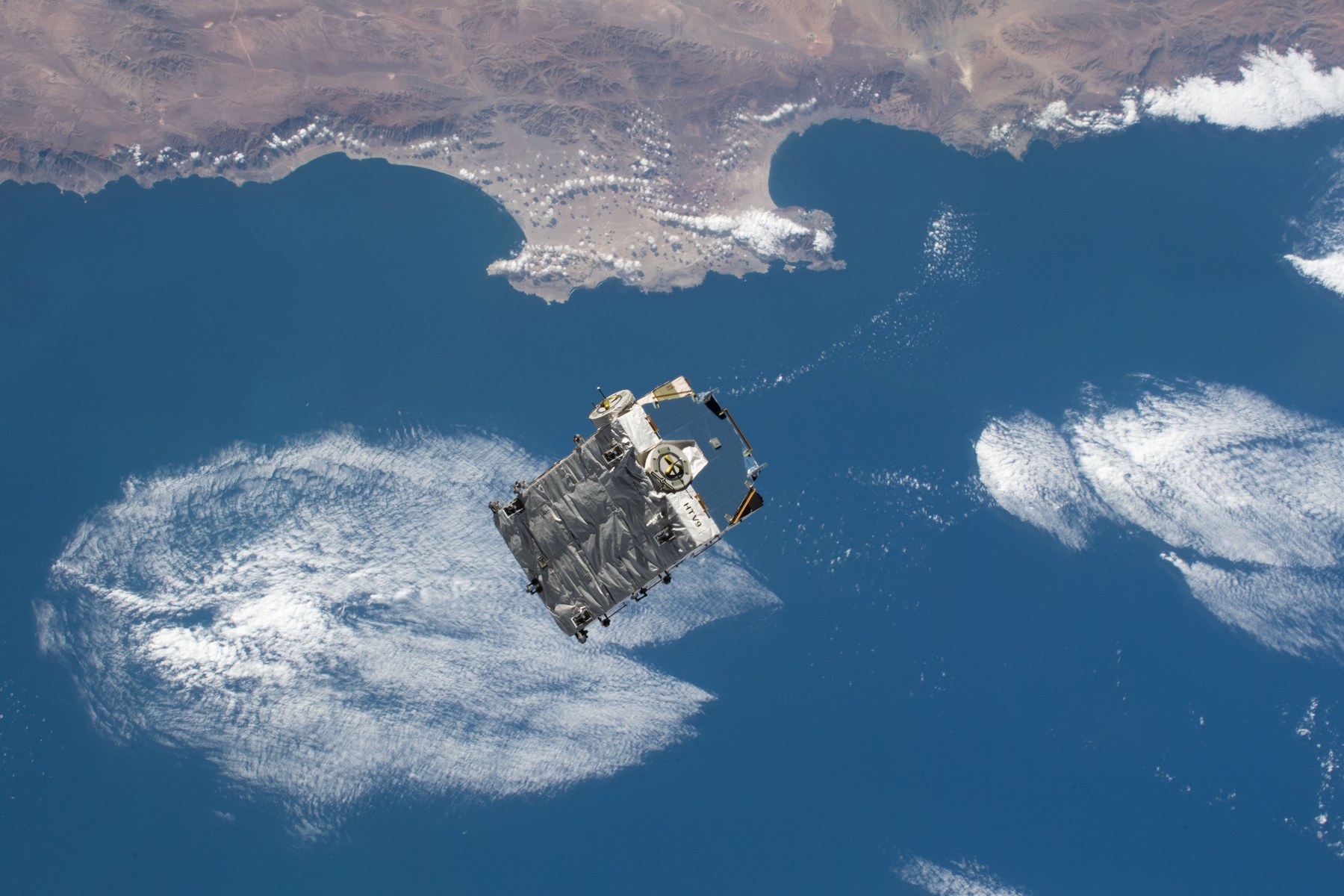
When NASA released a pallet of old batteries from the International Space Station in March 2021, the caption on its own photograph said it would orbit for two to four years “before burning up harmlessly in the atmosphere”. On 8 March 2024 a metal stanchion from that hardware, weighing 1.6 pounds, came through the roof of a house in Naples, Florida, as NASA later confirmed.
So what happens if space junk hits your house? The treaty everyone cites will probably not help you directly. Your insurer probably will, and after that it depends on whose object it was and where you live. The Florida file is the fullest householder’s claim I have found, so I use it as the guide.
Start with your home insurer
Consumer Reports says a typical US homeowners policy covers damage from “meteors, asteroids, aircraft, rockets, satellites and other falling objects”. Kiplinger explains why: a standard HO-3 policy covers the building against everything not excluded, and falling objects are not usually excluded. Contents may be on a named-perils basis, so check that wording. If the debris hits your car, the claim goes to your car insurer, and you need comprehensive cover. Policies outside the US vary, and I have not surveyed them.
In Florida this worked as it should. According to the account by the family’s lawyer, Mica Nguyen Worthy, the policy had no exclusion for space debris and the claim “was adjusted and paid in the ordinary course”. The insurer then pursued NASA to recover what it had paid.
Insurance will not pay your deductible, your uninsured losses or your distress. For those, you need the party that caused the damage.
Why the Liability Convention may not help
Article II of the Liability Convention says a launching State is “absolutely liable to pay compensation” for damage its space object causes on the surface of the Earth. It sounds like the answer, but there are two catches.
The first is who can use it. Under Articles VIII and IX, a State presents the claim to another State through diplomatic channels. You cannot file it yourself.
The second is Article VII, which says the Convention does not apply to damage to “nationals of that launching State”. The launching State includes the State that launches or procures the launch, and the State whose territory or facility is used. So an American hit by American hardware is outside the treaty altogether. We explain the wider scheme in our Liability Convention guide and our piece on space debris liability.
The Otero family argued that the US should be absolutely liable under the Convention anyway. NASA’s position, Worthy records, was that the Federal Tort Claims Act was the only route open to them.
What NASA paid in Florida
The family’s claims went to NASA on 22 May 2024. The three family members claimed about $84,500 between them, for items including uninsured loss, business interruption and emotional distress. Supercluster reported at the time that NASA would not comment on a pending claim.
On 22 November 2024 NASA offered to settle, and the offer was accepted. It paid $30,000 to the family and $14,151.22 to the home insurer, a total of $44,151.22, “without admission of any fault or liability”. The releases were not confidential. Payment still took months, and Worthy’s article says the family had to involve NASA’s Office of Inspector General.
Keep two limits in mind. These figures come from the claimant’s own lawyer, in a Defense Counsel Journal article from late 2025, and I found no NASA statement confirming them. And because no court ruled, the case decides nothing about strict liability or the Convention.
Claiming against the US government
There are two tools. The first is NASA’s own claims power. Under 51 USC 20113(m) and 14 CFR 1261.301, NASA may settle claims of $25,000 or less arising from its functions, at its discretion, even where the US would not otherwise be legally liable. The claim must be in writing within two years. Larger meritorious claims can be referred to Congress.
The second is the Federal Tort Claims Act, and the steps matter. You must present a written claim to the agency within two years. If the agency has not decided within six months, you may treat that as a denial and sue, and you generally cannot sue for more than you claimed, so state the sum with care. Worthy notes there is no jury and that liability usually follows the law of the state concerned.
Here you are arguing negligence, not absolute liability. The US can also raise the discretionary function exception, and Worthy suggests NASA might have done so, because no rule dictated how it had to dispose of the pallet. The same section excludes “any claim arising in a foreign country”. A householder abroad hit by NASA hardware cannot use the Act at all.
If it came from a company
The Florida object was government property. Much of what falls now is not. In May 2024 fragments of a SpaceX Crew-7 Dragon were found in North Carolina, one of them striking a roof without apparent damage, according to Worthy.
Against a US company you would bring an ordinary claim under state tort law. I have not found a reported US judgment deciding one. Behind the company sits insurance: under 51 USC 50914 a licensee must cover third-party claims for the maximum probable loss, capped at $500 million per launch or reentry. Above that, 51 USC 50915 lets the government pay successful claims up to a further $1.5 billion plus inflation, for licences applied for by 30 September 2028.
One caution, and this is my reading. That cover attaches to activity under the licence. A satellite that decays years after launch is a harder fit than a rocket stage falling during a licensed flight, so I would not assume the licence insurance responds.
If it came from another country
This is where the Convention works as designed. Your government presents the claim. Under Article X it has one year from the damage, or from identifying the liable State. Under Article XI it need not exhaust local remedies first, though it cannot run a Convention claim alongside a case in the launching State’s courts.
The only publicly known formal claim is Canada’s. It claimed C$6,041,174.70 over the nuclear-powered Cosmos 954 and settled for C$3 million, as we describe in our round-up of space law cases.
Identification is the practical hurdle. On 30 December 2024 a metal ring about 2.5 metres across and weighing about 500 kg fell in Mukuku village, and the Kenya Space Agency took custody of it and said it would try to identify the owner. In February 2025 suspected Falcon 9 debris landed at a company’s premises in Komorniki, Poland.
The UK offers victims something better for activity under its own regime. Under section 34 of the Space Industry Act 2018, damages for injury or damage on land or water in the UK are recoverable from the operator “without proof of negligence or intention”, unless the claimant’s own negligence caused or contributed to the harm.
Can you keep it?
Probably not, if the owner wants it back. Article VIII of the Outer Space Treaty says ownership of objects and their parts “is not affected by” their return to Earth. Article 5 of the Rescue Agreement requires objects found to be returned on request, at the launching authority’s expense, and lets a State warn of anything hazardous so that the danger can be removed.
In Florida, a sheriff’s officer retrieved the object, and the family then handled it only with gloves and tongs. NASA asked for it and took it on 28 March 2024. When the family later asked for it back, Worthy says, NASA refused.
My practical advice, which is general and not legal advice: do not handle it bare-handed, photograph it where it lies, call the police or fire service, and tell your insurer. Keep every invoice and record the time you lose. Worthy notes there is no US agency where debris claims can be reported.
What I would watch
The first is a court judgment. Nobody has yet tested whether a US court would apply anything like absolute liability to a falling object. A claim large enough to refuse a settlement will force the answer.
The second is 30 September 2028, the date in the indemnity statute. If it lapses, the backstop above insurance goes for later licences, and the arithmetic for a large casualty event changes.
The third is reporting. As reentries rise, the lack of a single US office to receive debris reports will look harder to defend. A homeowner should not have to rely on local news to reach the right agency.
Questions people actually ask
What happens if space junk hits your house?
Report it to the police and your home insurer, and photograph the object without handling it bare-handed. Most standard US policies cover falling objects. Your insurer may then pursue the owner. For uninsured losses you claim against the owner yourself, or your government claims if the object came from another country.
Does home insurance cover falling space debris?
Usually, in the United States. Consumer Reports says typical homeowners policies cover rockets, satellites and other falling objects, and the Otero family’s Florida insurer paid for repairs in 2024. Check your own policy, especially for contents. Damage to a car goes to your car insurer and needs comprehensive cover.
Can you sue NASA if space debris damages your home?
Yes, but you must first file a written claim with NASA within two years under the Federal Tort Claims Act and wait up to six months. You then argue negligence, without a jury. NASA can also settle claims of $25,000 or less at its discretion, even where the US is not legally liable.
Has anyone been paid after space junk hit a home?
Yes. NASA settled the Otero family’s claim over the 8 March 2024 strike in Naples, Florida. According to the family’s lawyer it paid $44,151.22 in total, including $14,151.22 to the home insurer, and did not admit fault. The offer came on 22 November 2024.
Does the Liability Convention protect homeowners?
Only indirectly. It makes the launching State absolutely liable for damage on Earth, but only States can claim, within one year, and Article VII excludes the launching State’s own nationals. A homeowner hit by a foreign object must ask their government to act. Canada’s Cosmos 954 claim is the only known formal use.
Can you keep space junk that lands on your property?
Generally not if the owner asks for it. Article VIII of the Outer Space Treaty says ownership survives return to Earth, and the Rescue Agreement requires return on request at the launching authority’s cost. In Florida, NASA took the object for analysis and later refused to give it back.

Anuj KumarEditor-in-Chief
Anuj Kumar is the founder of Legal Desire Media and publishes Fashion Law Journal and Space Law Journal.
Space Law Journal is a joint initiative of Legal Desire Media and Odyogeek. Spotted something we got wrong, or want to respond? Write to space@legaldesire.com.